Michael J. Sandel, a Philosopher Against Perfection
The political philosopher and 2018 Princess of Asturias Award laureate for Social Sciences, Michael Sandel (Minnesota, 1953), gave a lecture this Monday at the Areces Foundation, bearing the same name as his book, ‘The Case against Perfection: Ethics in the Age of Genetic Engineering’. The new advances in biotechnology call for an ethical critique that is always highly complex, for, in order to preserve our moral and ethical values, particular cases make it difficult to resolve important questions.
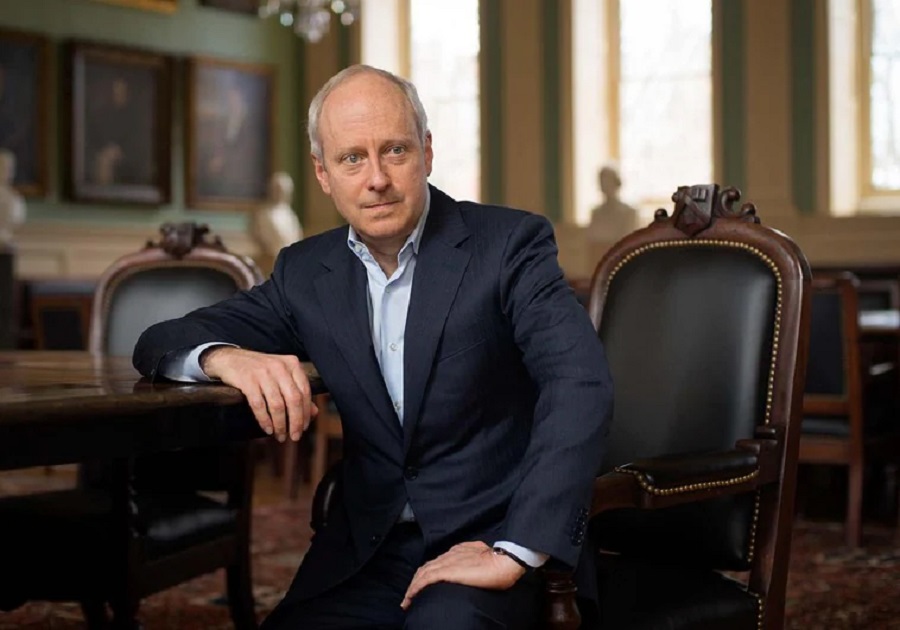
The political philosopher and 2018 Princess of Asturias Award laureate for Social Sciences, Michael Sandel (Minnesota, 1953), gave a lecture this Monday at the Areces Foundation, bearing the same name as his book, ‘The Case against Perfection: Ethics in the Age of Genetic Engineering’. The new advances in biotechnology call for an ethical critique that is always highly complex, for, in order to preserve our moral and ethical values, particular cases make it difficult to resolve important questions. As he stated this Monday, a deeper understanding of the implications these techniques entail is needed in order to shape public debate.
In the lecture, held in the form of a dialogue and attended by King Felipe VI, the Harvard professor showed us how ethics comes into play in the pursuit of human enhancement through genetic engineering and, in particular, of reprogenetics in human life. Sandel argues that there must be limits and ethical control over actions such as genetic manipulation applied to human reproduction in order to improve the physical or mental qualities of future children according to the parents’ preferences, or such as the enhancement of capacities like memory, the choice of sex, or of physical characteristics like height or musculature. For these possibilities can lead to cases, like the one Sandel himself cites, of two deaf lesbians who sought sperm from a man with five generations of deafness in order to achieve their goal of having a deaf child like themselves. Or to the violation of the child’s freedom and autonomy by paying for eggs or sperm that improve his or her qualities according to the standards of excellence the parents desire, reaching the extreme case, as he explains, of cloning.
These techniques can modify imperfection but also human diversity, by favoring some genetic traits over others, and by ruling out the occasions on which nature surprises us with new abilities or evolutionary talents. They could also undermine freedom and equality by creating social pressure that would make some parents feel obliged not to let their children fall behind. Sandel adds that it would lead us to a utilitarianism and a commercialization of human life, resulting in an unequal society, since the ability to carry out those genetic enhancements or not would depend on one’s economic power.
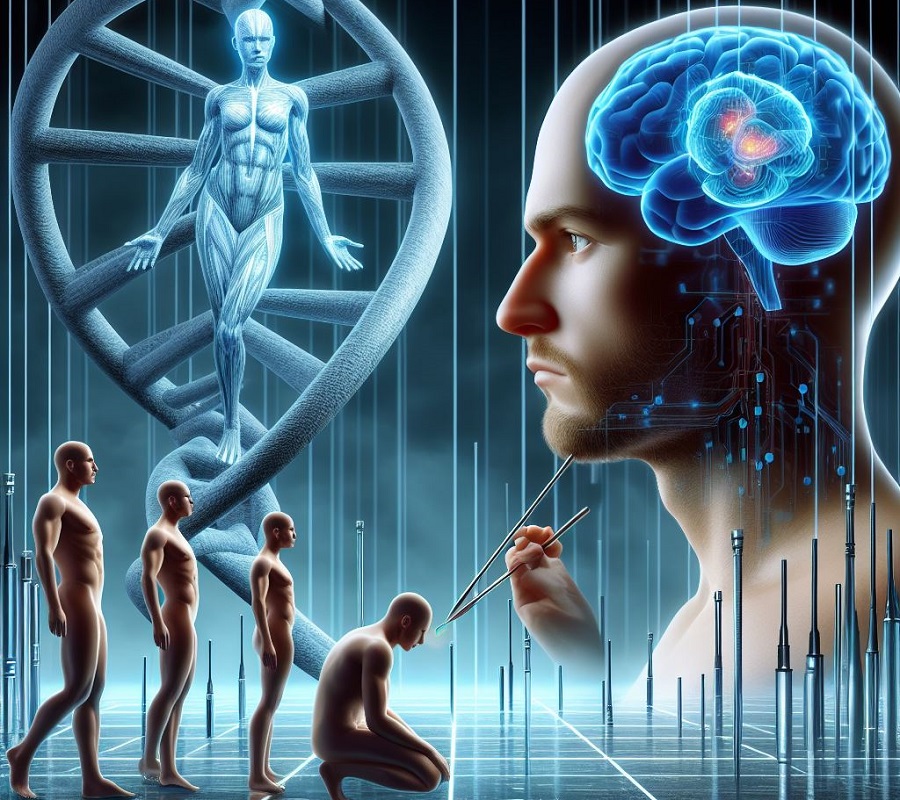
One case of how these questions ought to be analyzed is, for example, that of eugenics, a term that means «well born». It is a movement that arose in the nineteenth century, as Sandel recounts in his book, which sought to improve the genetic constitution of humanity. Its ideas reached the United States through Sir Francis Galton, a cousin of Charles Darwin, and were promoted by Charles Davenport. The purpose was to gather data from hospitals, prisons, and so on in order to force compulsory sterilization based on genetics. In this way society could be rid of the genetically unfit. This was taken to the extreme by Hitler, an admirer of eugenics, who applied it beyond sterilization, going as far as genocide. As a result, the old eugenics produced unanimous ethical rejection, as a violation of human rights.
Both in the work cited and in his lecture, Sandel sees no moral difference between the eugenic aim and designing children by choosing specific qualities through the purchase of gametes with the genetic traits selected by the parents. He calls this a free-market «new eugenics», because it could lead to a society in which reducing people’s values and dignity to their genetic characteristics gives rise to discrimination and to social and economic inequality.
Above this pursuit of human perfection and modification, Michael Sandel defends a greater understanding of our nature. Human nature is a diversity of abilities, the acceptance of oneself with one’s imperfections, the freedom to choose our own path, authenticity instead of meeting predefined standards. And it is to value the unmerited gifts that life has given us, because they are bestowed on us without any merit of our own at birth. In short, we must avoid an instrumental and utilitarian conception of the gift that is human life.
Michael J. Sandel- ‘The Case against Perfection: Ethics in the Age of Genetic Engineering’
– Michael J. Sandel, a Philosopher Against Perfection – – Alejandra de Argos –