

The British Museum Programs a Major Edvard Munch Retrospective
The show “Edvard Munch. Love and Angst” focuses on the powerful prints of the Norwegian expressionist artist and includes the lithograph that made him famous: “The Scream”.
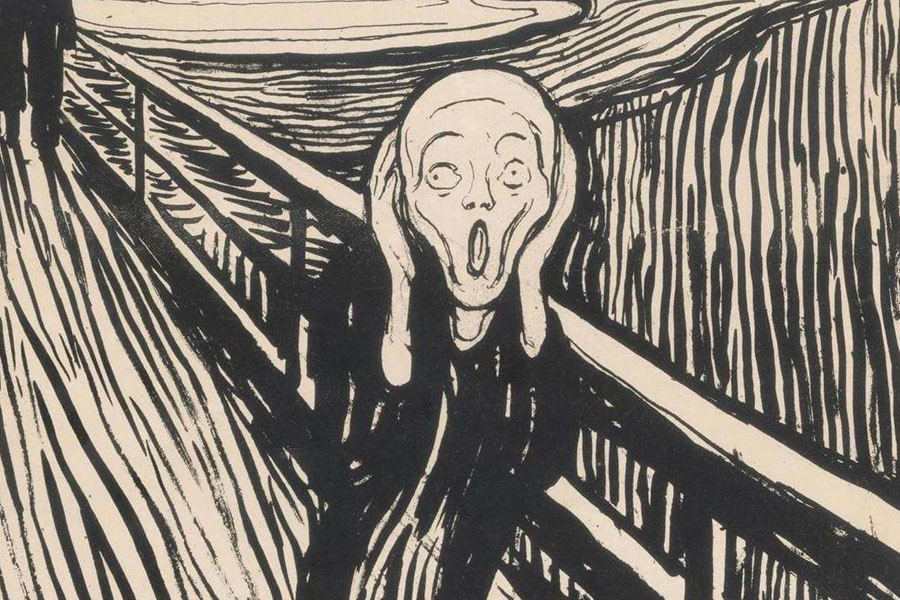
“The Scream”. (1895). Lithograph by Edvard Munch. At www.standard.co.uk
This coming spring the city of London will host an exhibition focused on the work of one of the most admired, valued and powerful painters of the European avant-garde: Edvard Munch. His canvas “The Scream” is one of the best-known and most widely diffused images in the history of art, having even generated its own emoji. The exhibition “Edvard Munch: Love and Angst” will occupy the museum’s Sir Joseph Hotung Gallery and will remain open from 11 April to 21 July 2019. However, those who go to it with the intention of seeing the artist’s magnificent canvases may be in for a surprise: the show focuses on Edvard Munch’s graphic work, an impressive display of lithographs and engravings that delves into the passion for this technique that the creator always demonstrated. The selection includes the black-and-white lithograph “The Scream”, a version prior to the famous painting that distills the same intensity as the canvas, accompanied by drawings and texts by the author.
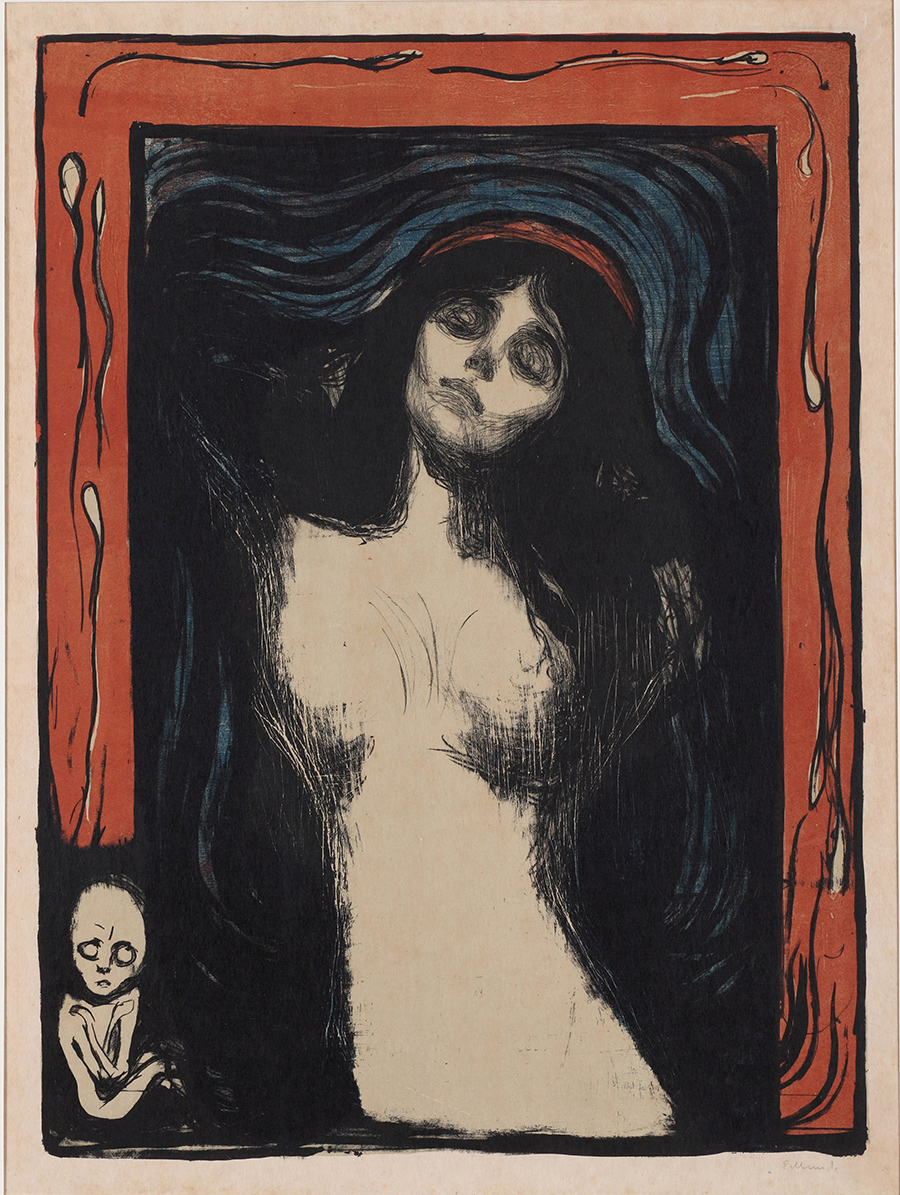
“Madonna” (between 1895 and 1902). Lithograph by Edvard Munch. At Wikimedia Commons.
Currently only around fifteen reproductions survive of those the artist made of this work, from the original matrix (which was destroyed). Together with “The Scream”, visitors to the exhibition will also be able to see another 50 prints lent by the Munch Museum in Oslo (Norway); among them, some iconic works such as the lithograph titled “Madonna”. This print aroused great scandal at the time (late 19th-early 20th century), by depicting a woman surrounded by spermatozoa and accompanied by an abandoned fetus, relegated to oblivion in the lower left corner of the work. As the name of the exhibition indicates, love and angst were two of the main axes around which the artist articulated much of his work. The fear of illness and death, the angst created by nature itself or by human society, and the dread of losing the loved one or of one’s own life experience are constantly reflected in the prints that the British Museum will exhibit. “Edvard Munch: Love and Angst” is, moreover, the largest retrospective of the artist organized worldwide in 45 years: an essential show for the London spring.
You may also like
 The Cayon Gallery Brings Dan Graham’s Work to Madrid
 Lita Cabellut Fulfills the Dream of Exhibiting with Her Master
 The Statesman and the Artist: Sir Winston Churchill and Painting
 “Agudas” by Michelle Dean: Words That Cut Like Knives
 Jordan Casteel: First Retrospective at the Denver Art Museum
 Sorolla’s Mediterranean Light Lands in London