

The Statesman and the Artist: Sir Winston Churchill and Painting
The book, edited and prefaced by Sir David Cannadine, recounts the passionate relationship with painting that the celebrated British politician and statesman maintained.
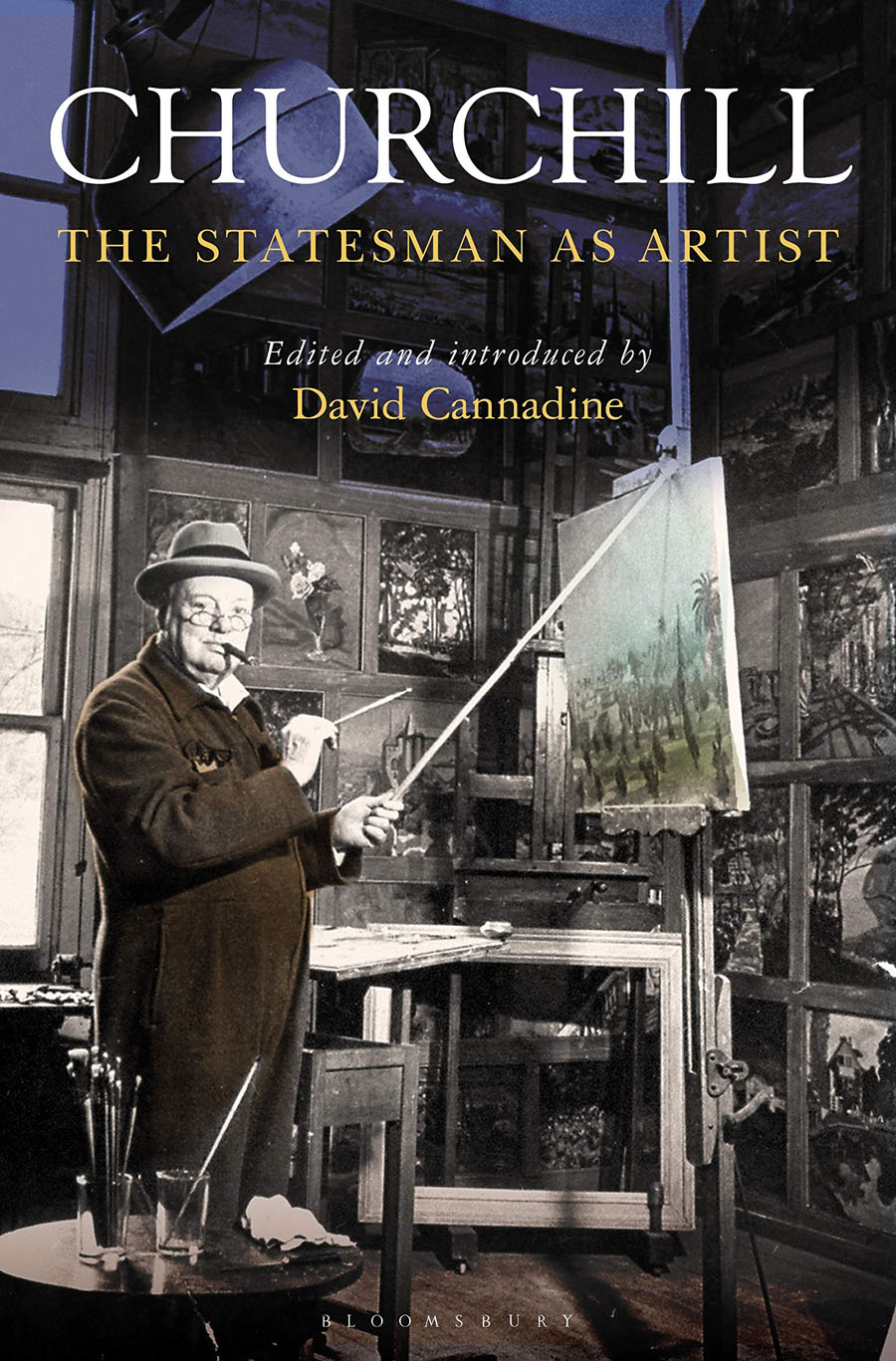
Cover of the book The Statesman as Artist, by Bloomsbury. At winstonchurchill.org
“As the old soldier became a painter, he naturally faced his encounters with the empty, pristine and intimidating canvases as battles of will, which had to be overcome through an overwhelming deployment of powerful colors and chromatic force”. This paragraph gives the measure of the texts that populate the pages of The Statesman and the Artist, the book published at the end of 2018 by the English publisher Bloomsbury that reflects the intense relationship that Sir Winston Churchill maintained with painting. The celebrated politician and statesman came into contact with brushes and canvases after the disaster of the Battle of Gallipoli, which took place in the summer of 1915, and which produced in him an intense state of depression (well known to Churchill, who in his writings speaks of that state as “the black dog”). Out of military and political life and with a merely representative post, he sought refuge in Hoe Farm together with his wife, Clementine. During a visit by his brother Jack, his sister-in-law Goonie invited Churchill to play with watercolors and paper. It was the beginning of a passionate relationship, which the future British Prime Minister would keep throughout his life.
Presentation of the book The Statesman and the Artist by the author, Sir David Cannadine. Via The International Churchill Society
The pages of the fascinating book by the historian Sir David Cannadine take us on a journey through the life of the celebrated figure, always through his artistic passion. Although Churchill was no more than an amateur artist, his works had an acceptable quality and were inspired by new pictorial schools, such as the impressionist. The statesman did not limit himself to painting: he also wrote two articles on painting, which were published in 1921 and 1922 by Strand magazine. In this case, the politician amply demonstrated his recognized talent for writing: in the words of the book’s author, “Churchill wrote the articles with an uncommon humility and self-deprecating candor, seasoning them with a clearly recognizable verve and playful sense, and with vivid lexical constructions”. Throughout the following decades Winston Churchill continued painting landscapes and still lifes, always keeping away from the more modern currents that pointed toward abstract art. The book pays a heartfelt tribute to Churchill’s passion for a hobby that came to him unexpectedly, which he turned into a liberating element and to which he devoted as much time and energy as to his political career.
You may also like
 Lita Cabellut Fulfills the Dream of Exhibiting with Her Master
 “Agudas” by Michelle Dean: Words That Cut Like Knives
 Jordan Casteel: First Retrospective at the Denver Art Museum
 Sorolla’s Mediterranean Light Lands in London
 “La chica de la Leica”, or the Woman Behind the Photojournalist
 An Art Center, Oceans and Science in a Venetian Church