Paul Gauguin, Natural Beauty
The exhibition “Gauguin. The Noa Noa Diary and Other Adventures”, which has opened in Rome, invites us to follow the intimate and artistic journey of the master of Symbolism. Inspired by his writings from Tahiti, the show reveals a Gauguin in search of the primitive and the authentic, far from a decadent Europe. With more than 160 works, including pieces by Van Gogh and Emile Bernard, the exhibition shows how Gauguin transformed painting into a spiritual and symbolic language that opened the way to the modern art of the 20th century.
On 6 September the exhibition “Gauguin. The Noa Noa Diary and Other Adventures” will open in Rome, at the Historical Museum of the Infantry. This show, which will feature more than 160 works, will also include some artistic creations by other authors who were connected with the master of Symbolism Paul Gauguin (Paris, 1848 – Marquesas Islands, 1903), such as Vincent van Gogh, Richard E. Miller or Emile Bernard, among others.
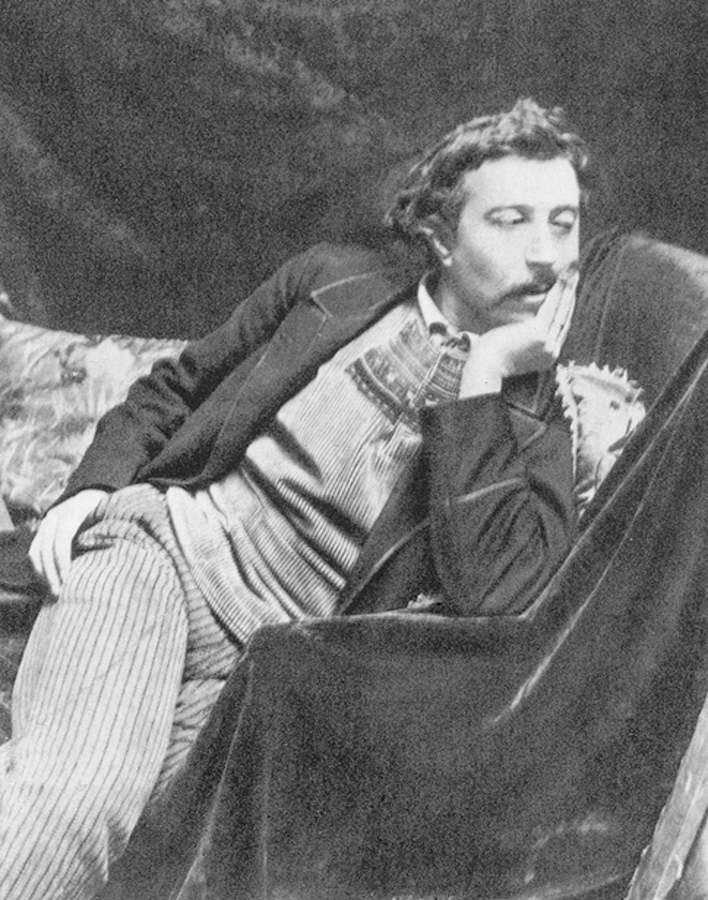
Portrait of Paul Gauguin in 1891.
This exhibition is inspired by the Noa Noa diary written by the French painter after his first trip to Tahiti in 1891. Gauguin, in a poetic tone, writes in his artistic notebook: “The island received me with perfumes. Noa Noa means ‘fragrant’. Everything here smells of flowers, of damp earth, of sea and ripe fruit. The body breathes better, relaxes. Nature has no limits, and neither do I.”
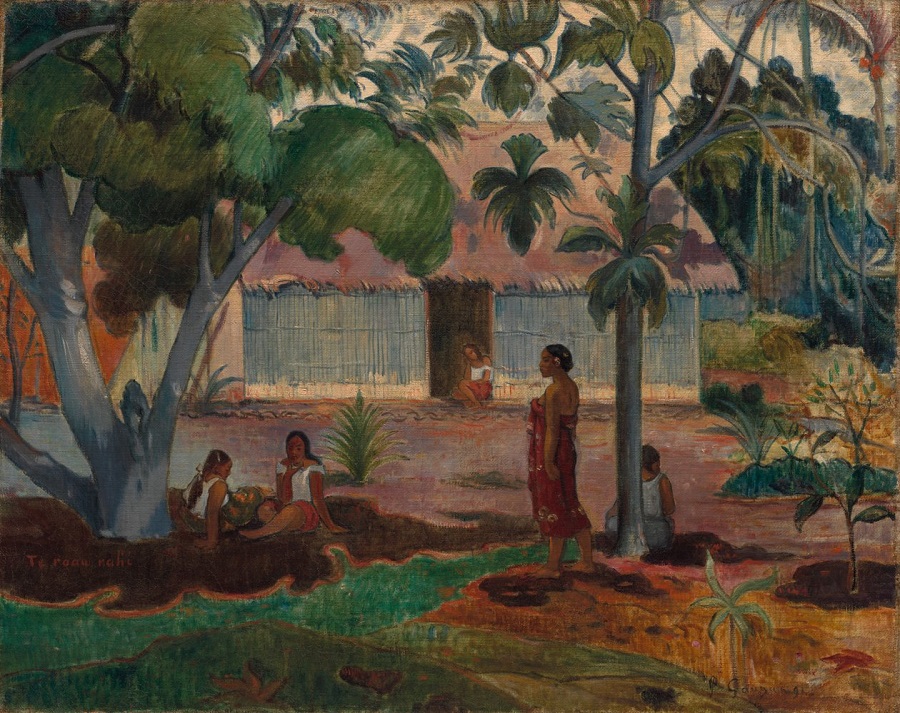
‘The Large Tree’, 1891.
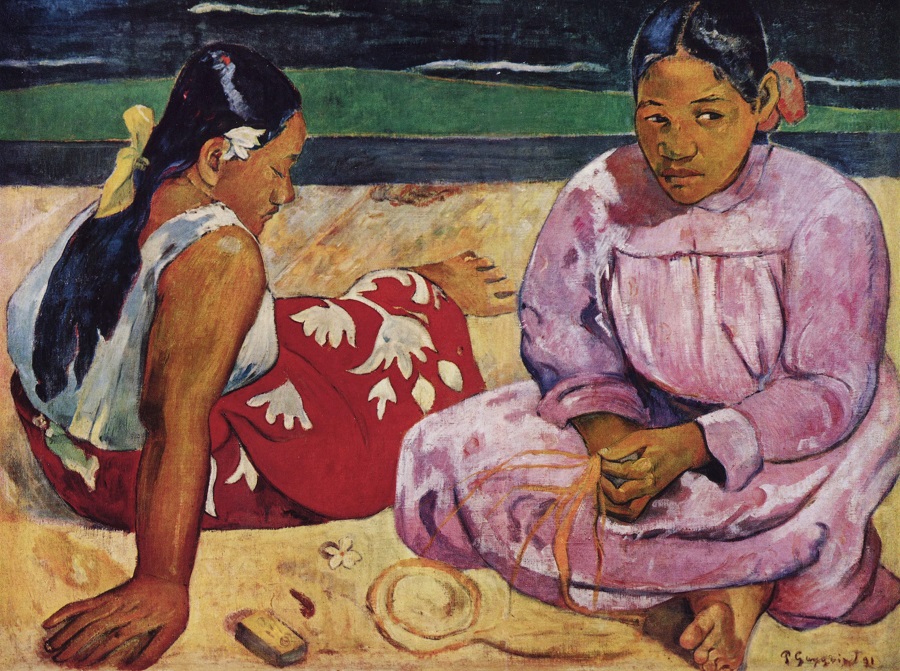
‘Tahitian Women on the Beach’, 1891.
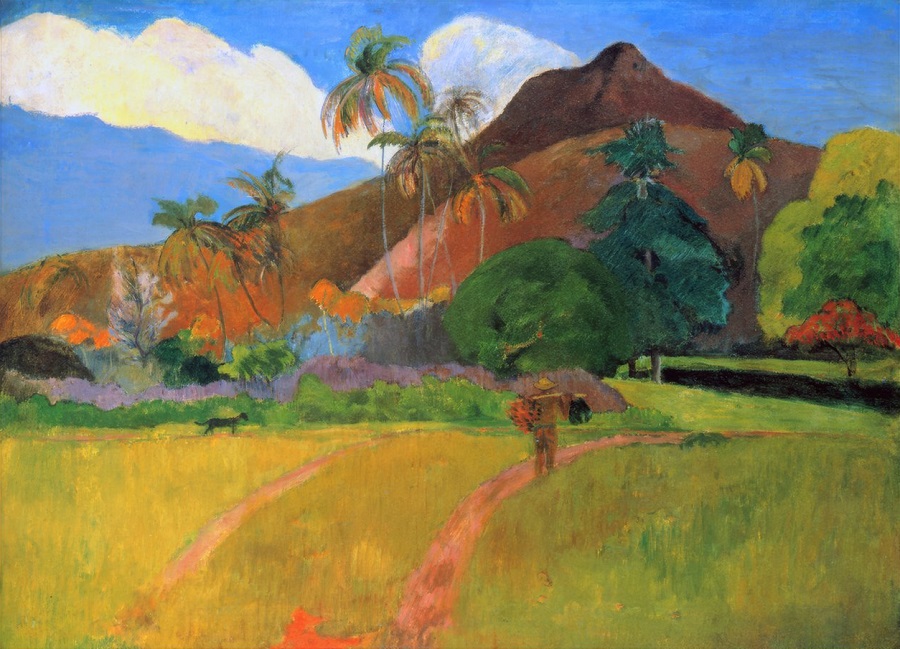
‘Tahitian Landscape’, 1893.
This diary goes beyond a travel chronicle, beyond memoirs. It is a very intimate, profound and existential account, written in a period in which Gauguin seeks to distance himself from European civilization, which he finds suffocating, strange, decadent, artificial and morally hypocritical. He will become a bohemian, a kind of native taking refuge in an ancestral, exotic and mysterious culture in search of the primitive, the naive, the pure. Gauguin had already left Impressionism behind some time before. His break with the tradition of European art and his shift were consummated in 1888. Two years earlier, his painting had been anticipating, on his trips to Brittany and Martinique, a search for the rustic, the pastoral tradition and primitivism. He would develop a Symbolism in connection with the literary, influenced by the poetry of Mallarme or Baudelaire, where objects appear as signs. And he would end up conceiving a new elaboration of painting, which he called “Synthetism”, and with which he intended to replace pictorial impressionism.
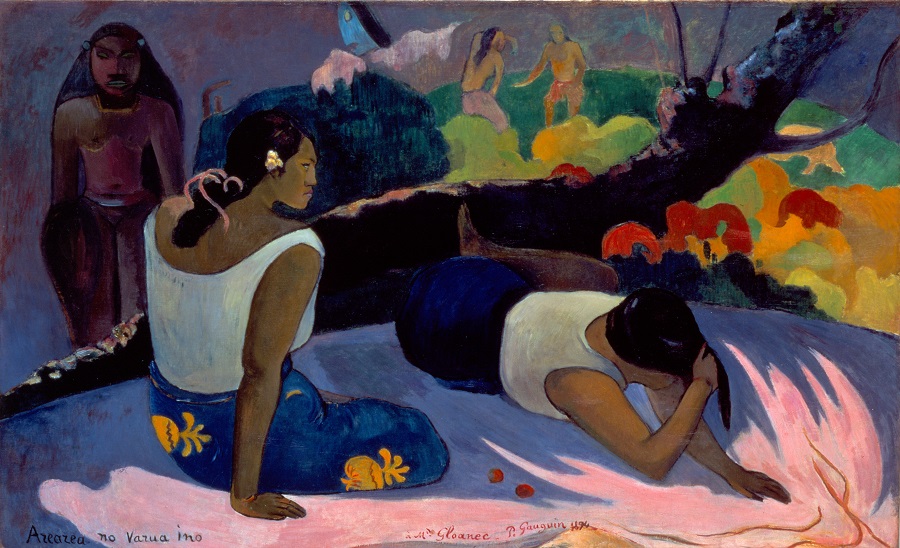
‘Arearea no Varua ino’, 1894.
He would never see his family again. Paul Gauguin married Mette-Sophie Gad in 1873 in Paris, with whom he would have five children. Coming from a good Danish family, Mette was a cultured and educated woman who worked as a governess. At that time Gauguin worked as a stockbroker, until the crisis of 1882, when he lost his job and decided to devote himself exclusively to painting. This separated the family, since these artistic aspirations were not enough to support the large family. Mette decided to return to Copenhagen with her children, where she survived by giving French lessons and with the help of relatives. Gauguin tried to integrate with them in Denmark but ended up returning to France. Their relationship eventually cooled and broke off for good.
In his diary he evokes that pure life he so desired. In Tahiti he found the primitivism he was looking for, that authenticity. The pages of Noa Noa describe an idealization of Tahitian culture, its local customs, its landscapes and his relationship with a young woman, Tehura. Of her he says: “Tehura became my companion. She was simple, silent, elegant in her movements. We did not talk much, but everything was said with the hands, the eyes, the body. She was part of the landscape, like a flower or a rock. We slept under the roof of leaves, without fear, like children under the sky of the gods.”
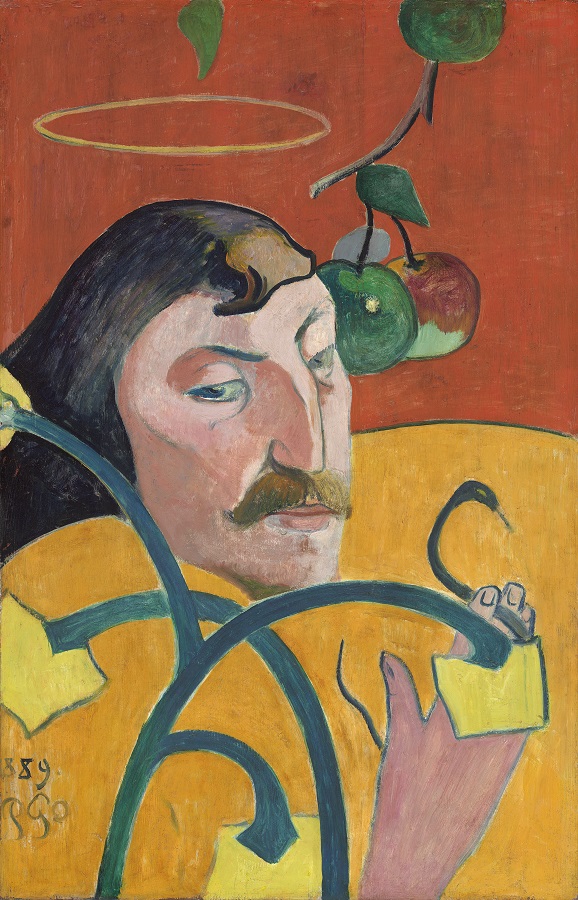
‘Self-Portrait with Halo and Snake’, 1889.
Gauguin’s personal and artistic transformation manifests itself in all its splendor with a more spiritual painting, definitively moving away from European Impressionism and Realism. His painting will be flatter, with pure colors and defined contours, charged with a symbolism that springs directly from his imagination. An orientalist and idealized vision of Tahitian culture that has bequeathed us masterpieces of extreme beauty that opened the way to the modern art of the 20th century.
– Paul Gauguin, Natural Beauty – – Alejandra de Argos –