Olafur Eliasson. The Artist as Scientist
Author: Elena Cue
Olafur Eliasson (Copenhagen, 1967), who this year came close to winning the Princess of Asturias Award for the arts in fierce competition with the winner, the filmmaker Francis Ford Coppola, is one of the most outstanding multidisciplinary and experimental artists of the present moment. He has exhibited in the best contemporary art museums in the world such as, among others, the Tate Modern in London (2003), the Museo Nacional Centro de Arte Reina Sofia in Madrid (2003) or the Museum of Modern Art (MoMA) in New York (2008).
Olafur Eliasson, a visual artist known for his experimental installations, sculpture, photography or film, is a creator who is inspired by certain motifs and ideas of recent German philosophy, ideas that he tries to put into practice in his work. Following this inspiration, his purpose is not limited then to the creation of works of art and to experimentation according to the usual, already consolidated modes. He wants much more. He aspires to educate the viewer so that he opens himself to new forms of perception and understanding of the world through his participation and inclusion in the work of art. He stimulates his perceptions and sensations so that he sees reality from other prisms and has a new experience and knowledge of his own subjectivity.
The work of art is only complete when the interaction between it and the viewer occurs, when the latter contributes his experience and his interpretation, thus also becoming a creator of the work. This aesthetics of reception is, then, very far now from the concept of the work of art as a “work in itself”, that is, in which there would only be room for a single concept and a single appropriate interpretation, that of the meaning given by the author. The work of Eliasson feeds, instead, on the plurality of meanings contributed by the viewer.
What Eliasson proposes to us is a transformation of our way of observing reality, a becoming aware of our prejudices and conditionings, in order to open ourselves to another way of relating to it. If we do not dismantle our world just as we perceive and understand it through our interaction with it, a product of our configuration space-time, of the projection onto it of our concepts, emotions and sensations, we will never be able to open ourselves to experiencing other worlds.
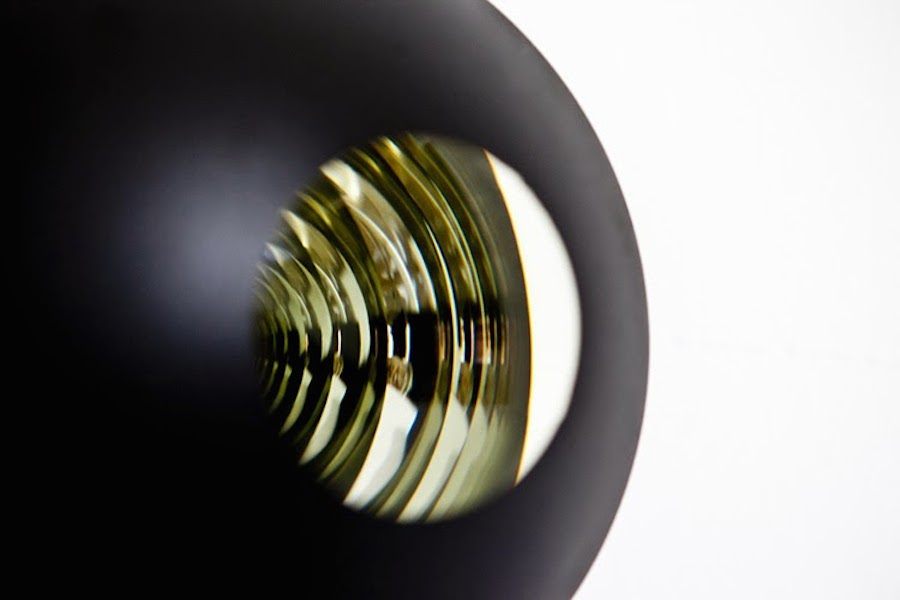
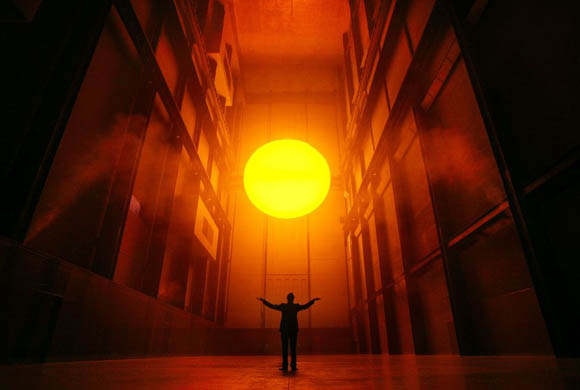
An example of this would be his splendid installation The Weather Project (2013): an immense sunset is reproduced in the Turbine Hall of the Tate Modern in London, and which is designed so that the visitor has an experience, not only of the importance of atmospheric weather in our survival since time immemorial and in the configuration of our social structures, but also of the relationship of existential time with our limitations as finite subjects.
In it artist and work merge at the moment when the observer interacts with the work by entering it, and thus creating a “now” shared between artist and viewer. To experience the “now” is then, for the visitor, the result of recalling the past (the artist’s conception, his own past experiences) and of anticipating the future (the meanings and projections it suggests to him), thus turning the “now” into the crossroads of both temporal dimensions.
In 1995, this artist created the Studio Olafur Eliasson, in Berlin, in which around 90 people including architects, engineers, graphic designers and art historians experiment, research and produce works developed with elements such as light, water, color, space… But, without doubt, the fundamental figure of this creative group during recent years has been the recently deceased engineer and mathematician Einar Thorsteinn. Olafur seeks to synthesize art and science as the great artists of the Renaissance did.
What is characteristic of this artist, then, is that he understands the world from the Kantian perspective of the configuration of reality on the part of the subject who projects his subjective schemes to give a cultural meaning to the world. Therefore, with his art, he tries to foster other types of gazes on the world with new perceptions and sensations.
Sometimes, through his visual games, he can produce an experience of pure sensations, that is, non-reflective, getting the viewer to come out of himself and see himself in the midst of the work, or he can provoke the active participation of the subject in it. Then one sees the importance of the role of the viewer who interacts with the work contributing his multiple interpretations.
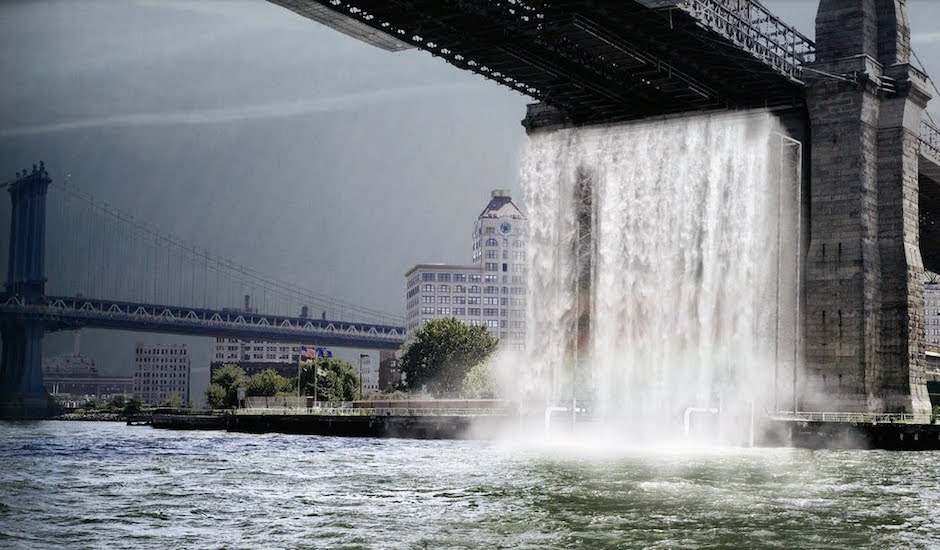
The installation of four waterfalls in the East River of Manhattan (New York City Waterfalls) or to dye green with ephemeral ecological pigments the waters of Stockholm, Tokyo, Los Angeles or Norway, among others (Green river), reveals his will to exercise our senses toward other possibilities of perceiving and experiencing that other reality configured by the effects of our cultural intervention on it.
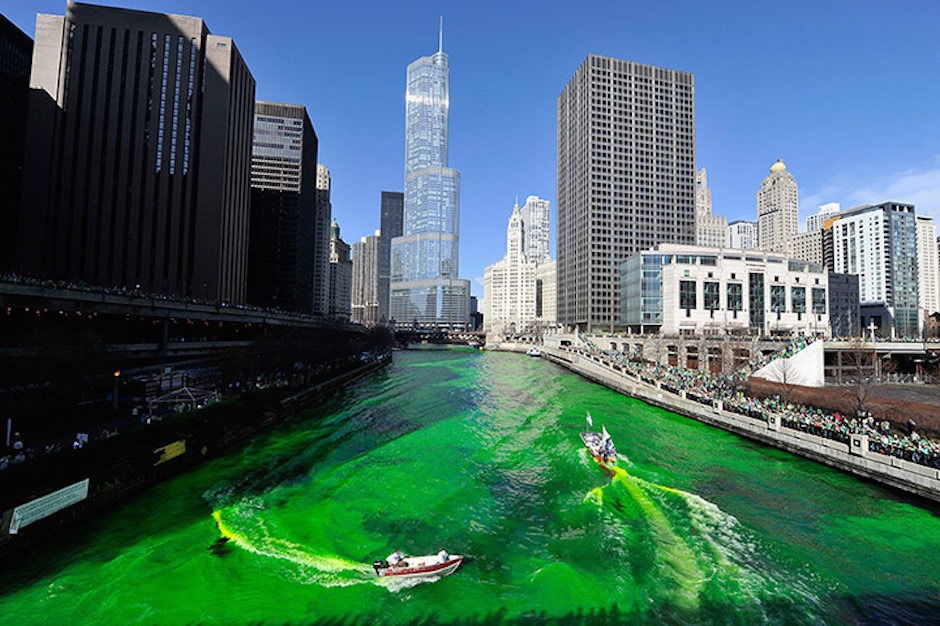
In short, the purpose of this artist is to go beyond the traditional role that art fulfills in our culture, when we relate to it according to the subject-object scheme. His purpose is to introduce us into an experience of cultural creation through art, which is not only the work of a creator, an artist in this case, but also of the recipients of those works which are not complete if they do not project onto the works meanings that complete them with their interpretations. In this sense, the viewer forms part of the work, is inside it, like those vessels in the green waters of the river or the visitors who enter the artistic sunset of The Weather Project.
– Olafur Eliasson. The Artist as Scientist – – Home page: Alejandra de Argos –