Paul Cézanne: Sense and Sensibility
On the occasion of “Cézanne 2025”, Aix-en-Provence pays homage to one of its great geniuses with an exhibition that traverses his life, his artistic legacy and his deep connection with the land that saw him born. Cézanne, a key figure in the transition toward modernity, knew how to combine structure and sensibility, reason and emotion, nature and painting, leaving an indelible mark that opened the way to cubism and the visual revolution of the 20th century.
In the French region of Provence the celebration “Cézanne 2025” has just begun. A commemoration that celebrates in Aix-en-Provence one of its most illustrious inhabitants, Paul Cézanne (Aix-en-Provence, 1839-1906). On the occasion of this homage to one of the fathers of modern art, “Cézanne at Jas de Bouffan” has just opened at the Granet Museum, an extraordinary international exhibition, with close to more than a hundred works by the artist. But in addition, the visitor is encouraged to continue delving into his legacy by exploring the painter’s native city and its surroundings, with artistic routes such as his des Lauves studio, the family house La Bastide du Jas de Bouffan, which have just been renovated, or the nature and its landscapes that so inspired the work of the celebrated painter, with their romantic Provençal vineyards. This proposal is an intimate and profound journey, straight to the emblematic places in which Paul Cézanne lived almost 40 years of his life.
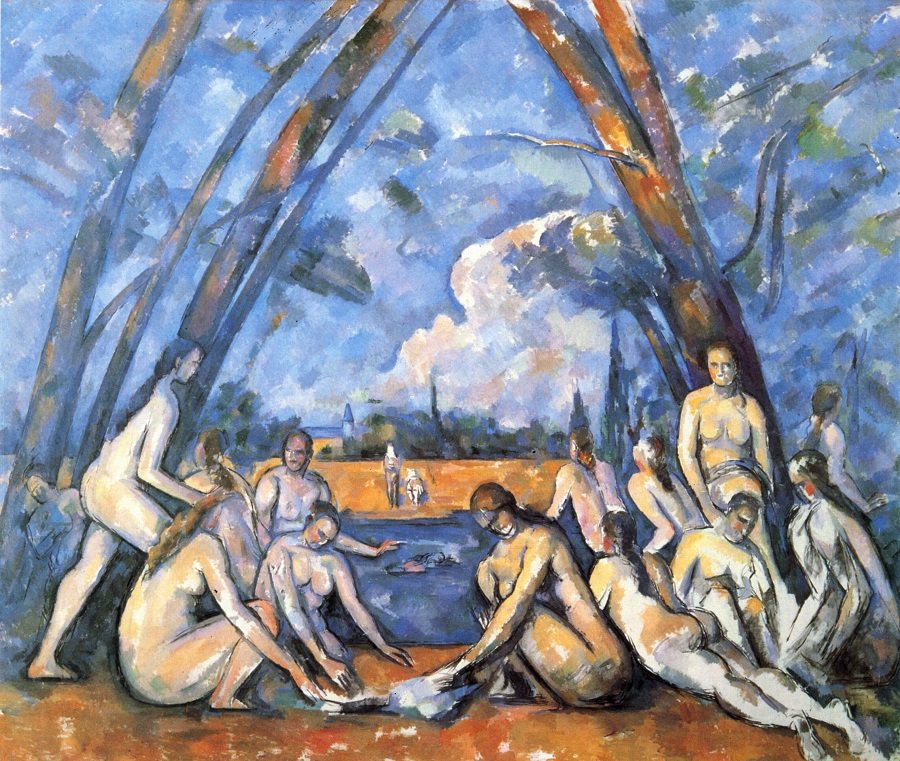
Les Grandes Baigneuses, by Paul Cézanne, Yorck.
For those interested in having an alternative and deeper look, beyond the usual approaches, I recommend the book “Cézanne” (Editorial Acantilado) by the Spanish philosopher Eugenio D’Ors (1881-1954). This book offers us a sharp dissection of the figure of the painter based on his friendship with the French writer and playwright Émile Zola (1840-1902), one of the great exponents of naturalism. It also shows us the legendary Cézanne, his life as it has reached us through history, or through his work.
The story of friendship with Zola is very particular. They met in their youth, in Aix-en-Provence when both were studying at the Bourbon College. A friendship based on their ideals and creative dreams, which was forged over time until the publication of Zola’s book “The Masterpiece” in 1886, when both lived in Paris and which ended up producing the rupture between them. Zola in his naturalist-style novel, which feeds on the closest reality, describes the artistic world of late 19th-century Paris, with details of the contemporary artists he frequented. His main character, Claude Lantier, is characterized as a failed, anguished, and desperate painter. Cézanne felt portrayed in this figure and therefore his friendship betrayed.
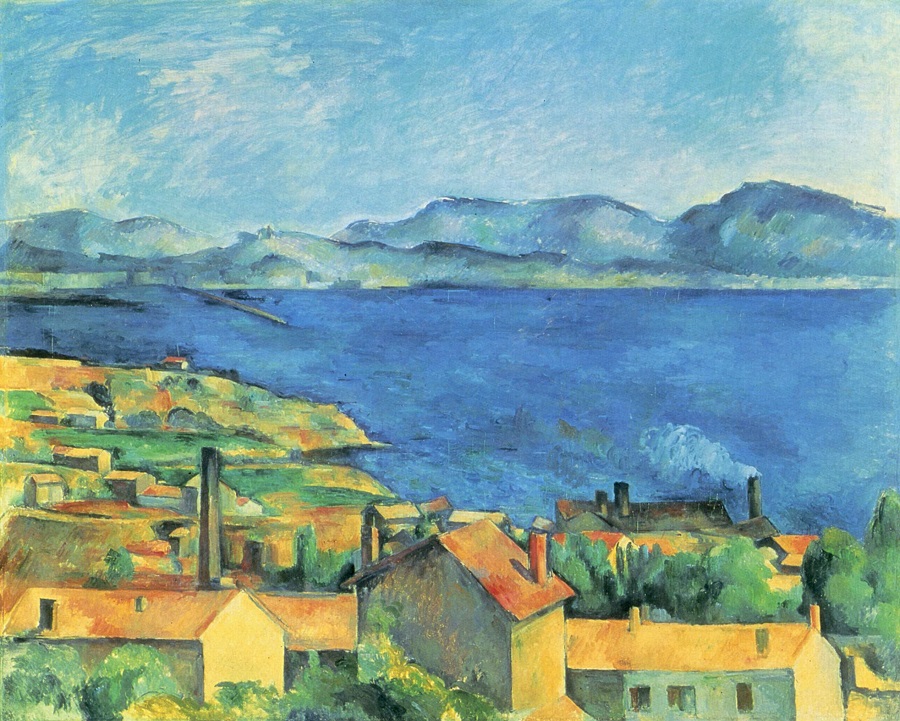
Baie de Marseille, vue de l’Estaque, by Paul Cézanne.
His dealer Ambroise Vollard was an essential figure in the painter’s rise and recognition, since he had bought many of his works when he had still not achieved commercial success. But the dealer previously ran into not a few difficulties in finding the artist, since he had already disappeared from Paris. His support became decisive when he organized his first solo exhibition in the gallery that Vollard had in Paris. All this contributed to giving Cézanne a visibility and a vital projection. Well then, as Eugenio D’Ors relates in his book, both the biographers and Vollard “have insisted greatly on the selfish and unfriendly character of Zola’s conduct toward the painter”. After this episode, Cézanne returned to his native Provence. In the end, the caricaturization of the literary character also deformed the image that the public had of Cézanne. He was branded a naive barbarian, a brilliant madman, weak, neurotic, misanthropic and anarchist. The confusion generated a legendary version of the painter. Aesthetically he is described as a truculent creator, of unforeseen brushstroke, lacking logic. Cézanne always aspired to exhibit in the Official Salon but was rejected again and again, until finally in the year 1882, he achieved it. But the joy lasted little because four years later “The Masterpiece” is published and the mythification of the artist makes Cézanne flee, evaporate and his life turn into a mystery until his death.
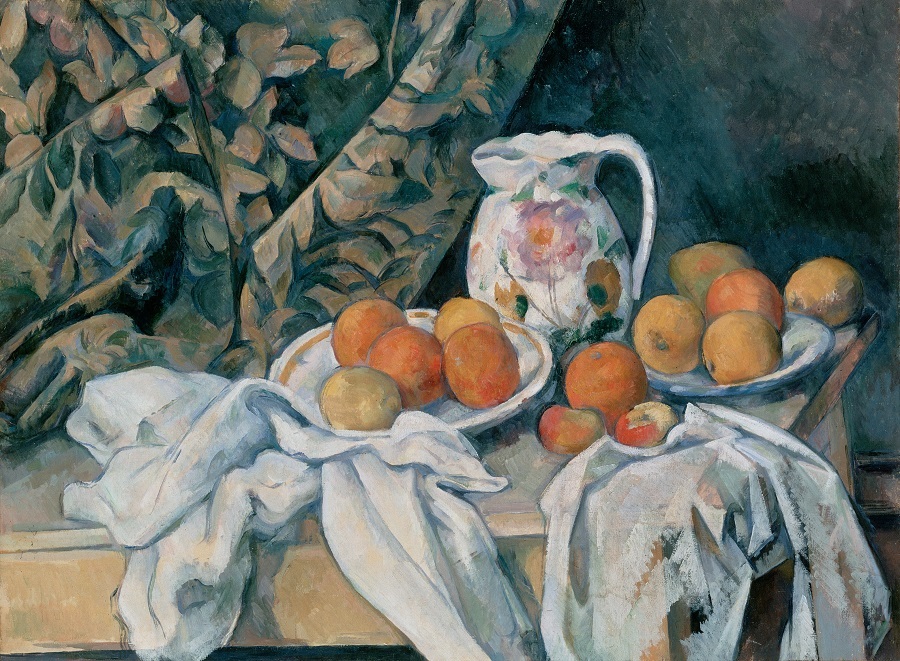
Still Life with a Curtain, by Paul Cézanne.
Afterward a current of sympathy arrived and the true Cézanne of history emerged. A kind and dreamy child, but with a nervous sensibility that distanced him from people and led him to live with solitude. His father, Louis Auguste, in his beginnings had a hat shop and buying-and-selling businesses whose commercial success made him become a banker. Because of him, Cézanne began his studies at the Law School of Aix, but his vocation revealed itself very early and his father in the end yielded, allowing him to go study art in Paris in 1861. His stay in Paris is marked by his difficulty in forming lasting relationships due to his shy and distrustful character. But in Paris he will forge artistic friendships, such as Pissarro who will accompany him all his life.
Cézanne was not an anti-academic, but rather he wanted at all costs the opposite, to be one in his own way, in a rational, structured and logical but also revolutionary form. And not based on his instincts, which were endowed with an extraordinary lyricism and musicality. His beginnings in the use of color are thick strokes that gradually over time would become finer in his painting, and “that ended up making it so austere, that the layer of color forms a whole with the canvas”, as D’Ors describes to us.
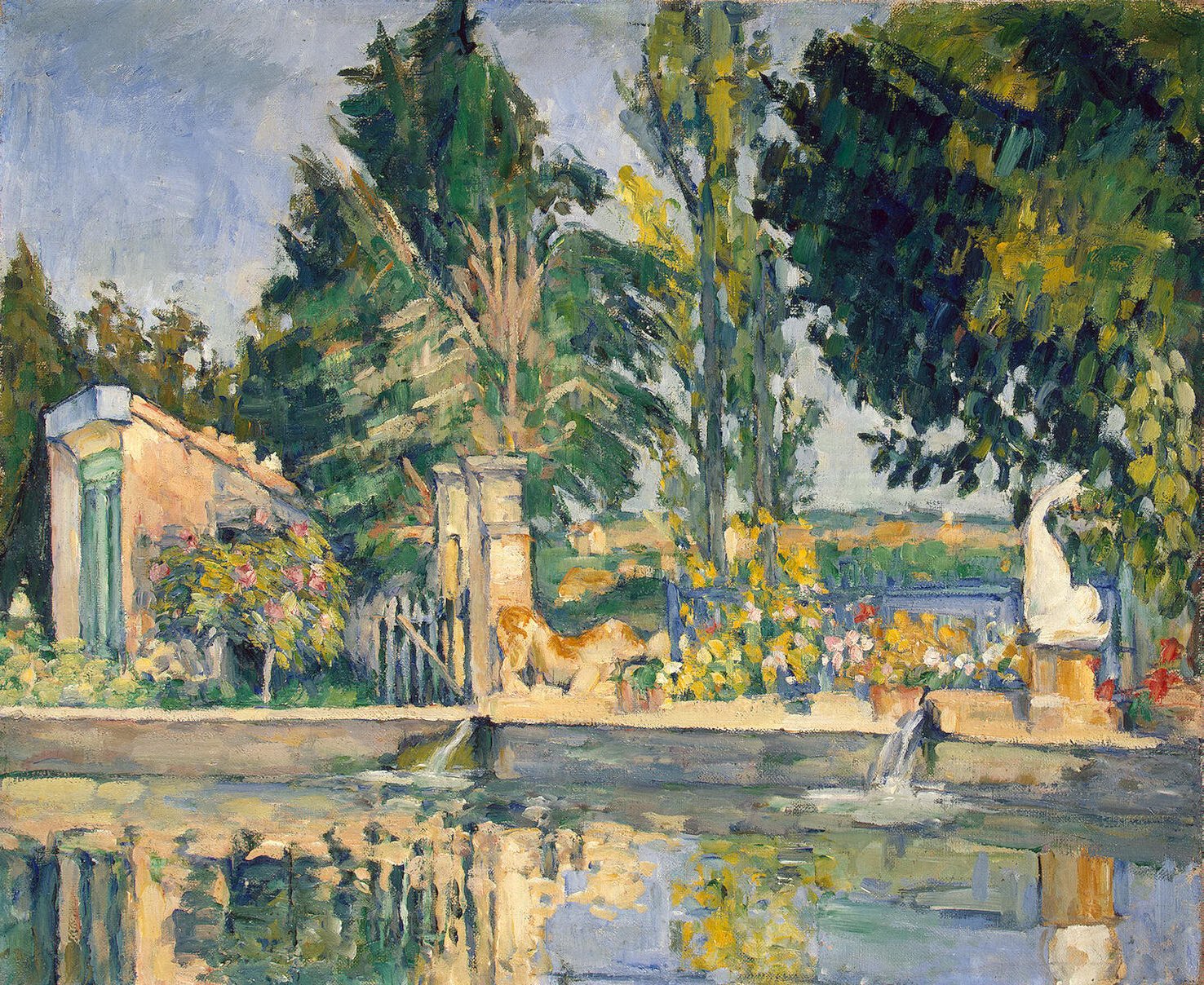
Le Bassin du Jas de Bouffan, par Paul Cézanne.
Cézanne in his beginnings entered an impressionist group in which were found, besides Pissarro, Manet and Renoir, among others. But despite having exhibited with them in his beginnings, his ideals were different. In 1899 he returns to Aix where at last he will be able to merge with nature, going out daily to paint it in the countryside. In 1906, already ill while painting outdoors, an autumn rain came over him that produced a fainting, and which later caused a syncope that he would no longer overcome. He died on October 22, 1906. He left an unfinished canvas, a version always incomplete and that always occupied his thought: “The Bathers”.
Cézanne has passed into the history of art as a glorious genius. Post-impressionist in his beginnings, then reactionary to impressionism, and finally a fighter for structure and rationalism. He was the precursor of cubism. According to Eugenio D’Ors “it could be said, up to a certain point, that, just as it was said that all ancient poetry came from Homer, all modern painting comes from Cézanne”.
– Paul Cézanne: Sense and Sensibility – – Alejandra de Argos –