Elsa Schiaparelli, rara avis
The Victoria & Albert Museum in London devotes a major retrospective to Elsa Schiaparelli (Rome, 1890 – Paris, 1973), the Italian aristocrat who turned fashion into art. Nourished by surrealism and by her collaborations with Dali, Cocteau and Man Ray, she created a language of her own that slapped the Paris of the 1930s and forever transformed the relationship between dress and avant-garde.
Last March, the Victoria & Albert Museum in London opened one of the most eagerly awaited exhibitions: Schiaparelli: Fashion Becomes Art. A retrospective devoted to Elsa Schiaparelli (Rome, 1890 – Paris, 1973) and to the influence of her fashion house from the 1920s to the present. Yves Saint Laurent would say: “She slapped Paris. She hit it. She tortured it. She bewitched it and Paris fell madly in love with her”.
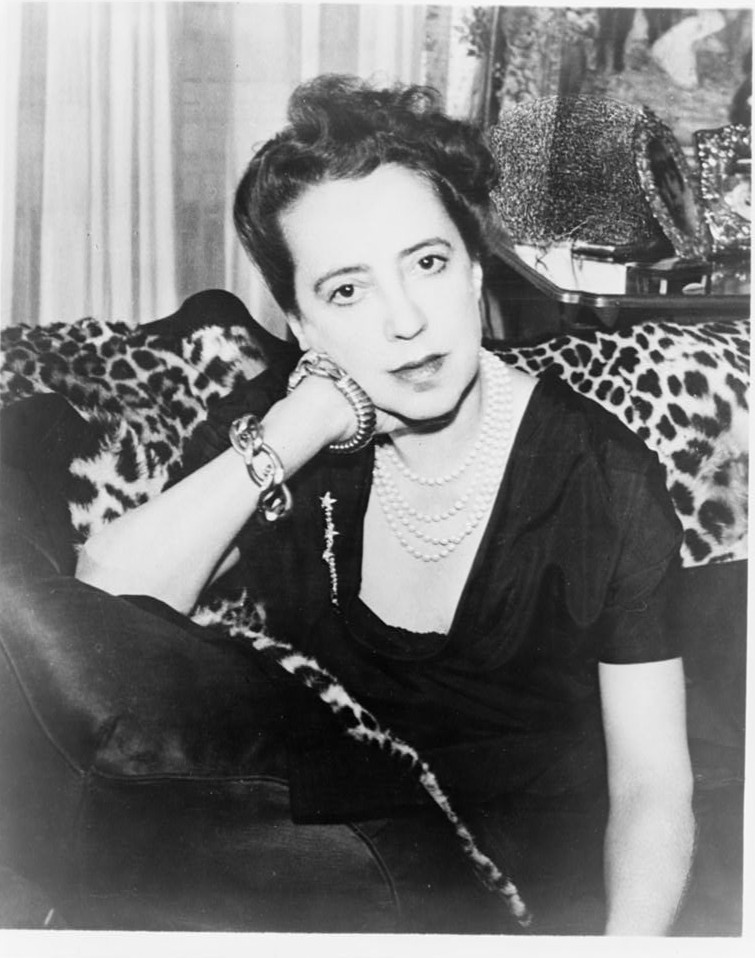
Elsa Schiaparelli portrayed in her salon, 1952. Library of Congress, Washington
The life of Elsa Schiaparelli traces the fascinating journey of an Italian aristocrat who defied convention and transformed fashion with an overflowing imagination and creativity nourished by surrealism.
In her autobiography Shocking Life (1954) she recounts her childhood. She was born in the Palazzo Corsini in Rome in 1890. Daughter of a Neapolitan aristocrat and of an Italian astronomer and orientalist, her family environment was deeply intellectual, based on a strict morality. From a very young age Elsa understood that this academic and disciplined atmosphere was not made for her. In her family nothing foreshadowed that her life project would turn toward haute couture.
The most interesting thing, in my view, is how her personality was forged. After having received a religious education in her youth, Elsa wrote love-themed poetry, which caused a great scandal in her family because of the nature of her little book of poems. As a consequence, she was sent to London as a governess, where she would meet the man who would be her husband, the theosophist Wilhelm de Wendt de Kerlor, whom she married in 1914 and from whom she would separate a few years later, due to her husband’s numerous infidelities, among them with the dancer and choreographer Isadora Duncan. During her stay in New York they would have their only daughter, Maria Luisa. “Gogo”, as she was nicknamed, gave her two granddaughters to whom she was very close, one of them the famous actress Marisa Berenson, who took part in the extraordinary film Death in Venice, directed by Luchino Visconti in 1971 and based on the novel by Thomas Mann.
In the years she lived in New York, from when she settled there in 1919 until her departure for Paris in 1922, and before devoting herself to fashion, she entered the intellectual and artistic circles of the European avant-garde in exile. The influence produced by coming into contact with Dadaist circles, thanks to her friendship with Francis and Gabrielle Picabia, would forge her future way of understanding the body as a structure in which clothing must form an architectural construction. In this period she learns, as she recalls in her autobiography, that art does not have to be beautiful, it can be an idea, a mental game or a provocation. Then she felt that art was free and that fashion was limited to manufacturing objects to sell.
This perception will change when in 1922 she settles definitively in Paris and renews her friendship with Gabrielle Picabia, which was fundamental for entering the Parisian Dadaist and surrealist artistic circles that would so mark her modernity in the world of fashion. Here she would meet Man Ray, who would make his famous bust portrait of her, Portrait of Elsa Schiaparelli (1934). Also the remnants that remained at that time of Dadaism, such as Tristan Tzara or Jean Cocteau.
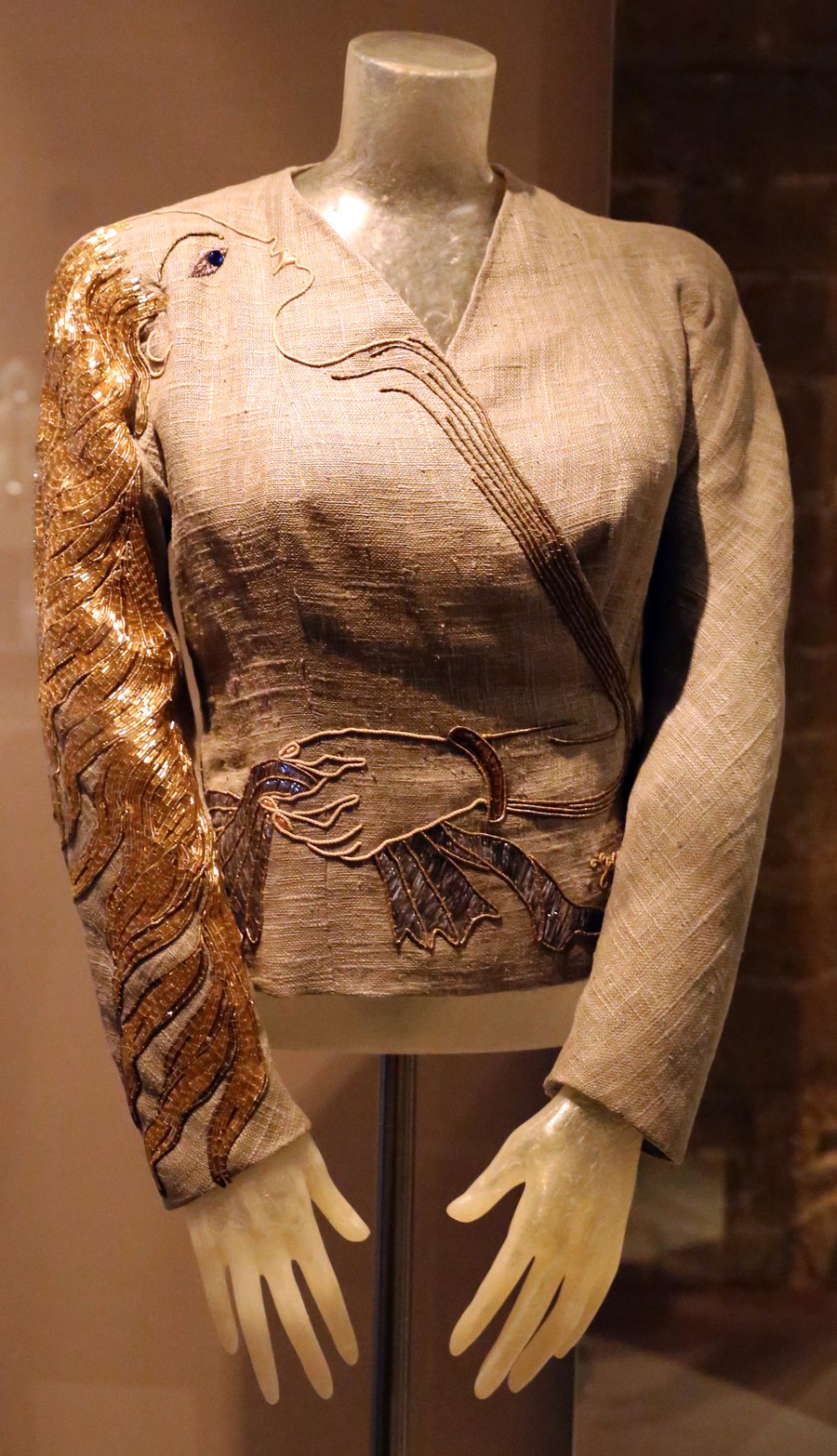
Elsa Schiaparelli and Jean Cocteau, embroidered evening jacket, autumn 1937. Philadelphia Museum of Art.
In this city and without prior technical training, she began to design garments influenced by contemporary art. Her first success was a knitted sweater with optical motifs (1927), which caught the attention of the fashion world. From then on she opened her couture house and developed a language of her own based on direct collaboration with artists.
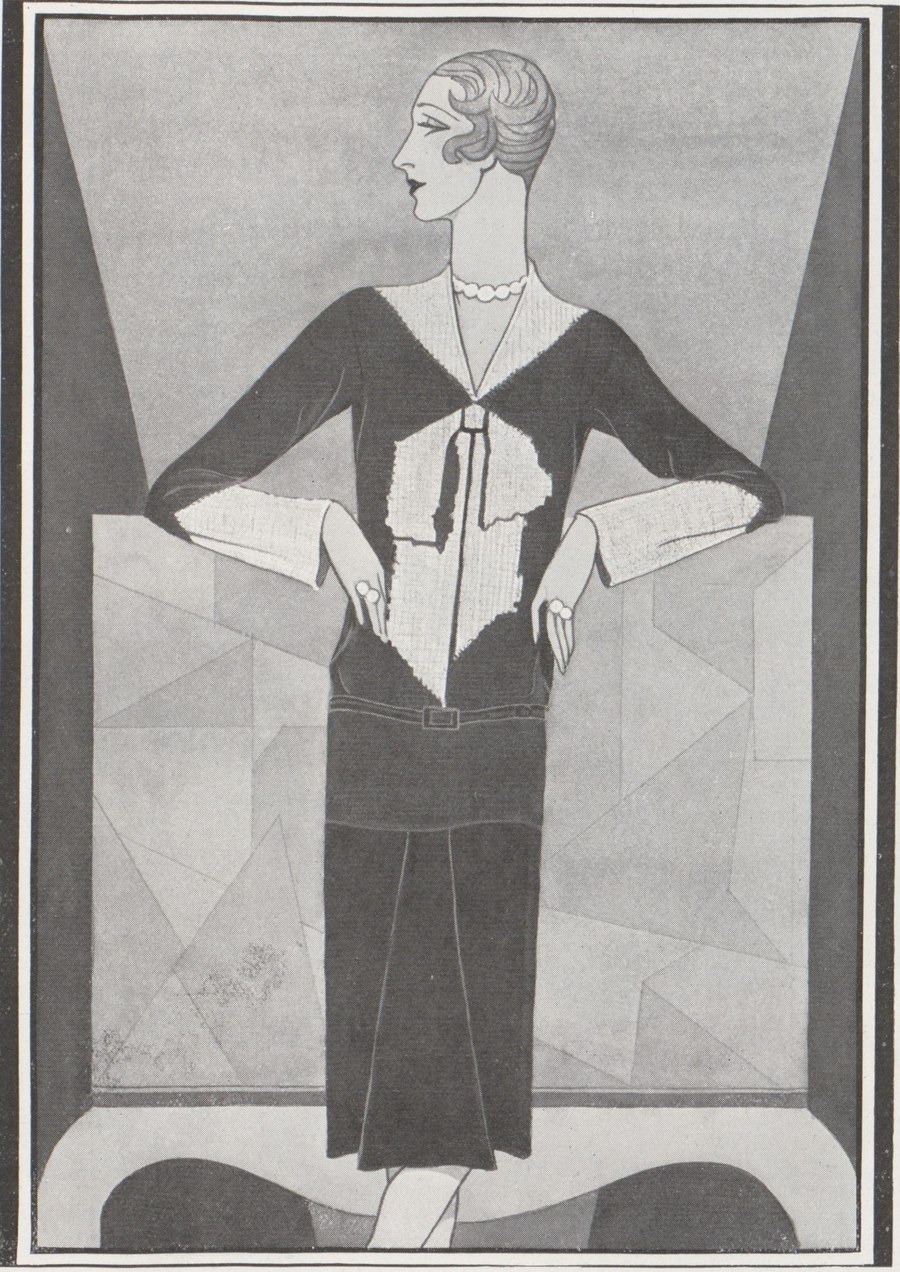
Elsa Schiaparelli, knitted sweater with a bow in trompe-l’oeil, 1927. Her first great success in Paris.
During the 1930s she became one of the central figures of haute couture. She collaborated with Salvador Dali, Jean Cocteau and Alberto Giacometti.
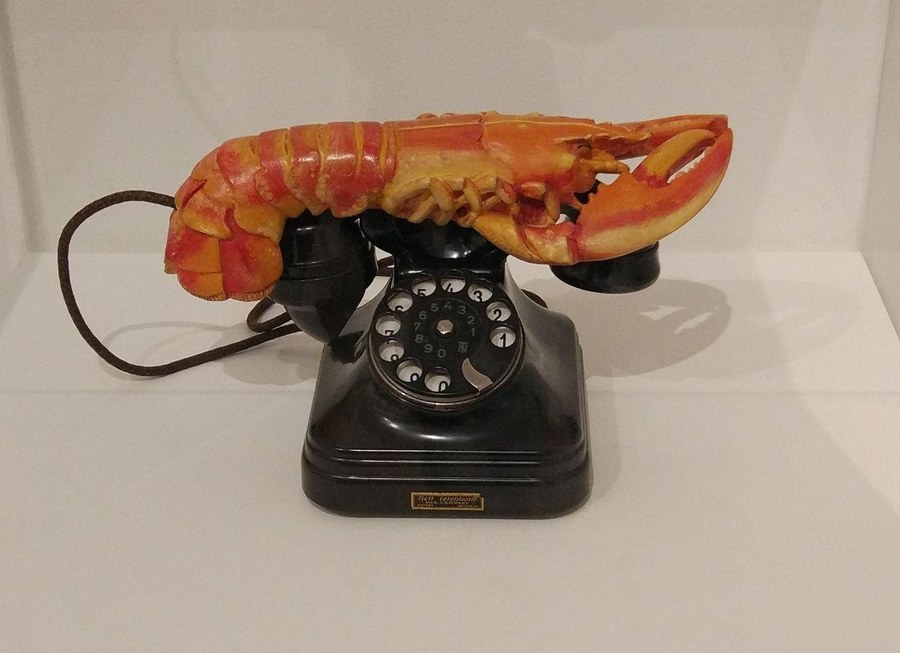
Salvador Dali, Lobster Telephone, 1938. Tate, London.
With Salvador Dali she made works such as the lobster dress and the shoe-hat, transferring surrealism directly to dress, with visible zippers and illusory prints. She also introduced the “Shocking Pink” color and a conception of fashion as an artistic object and cultural provocation, in contrast to the dominant classical elegance.
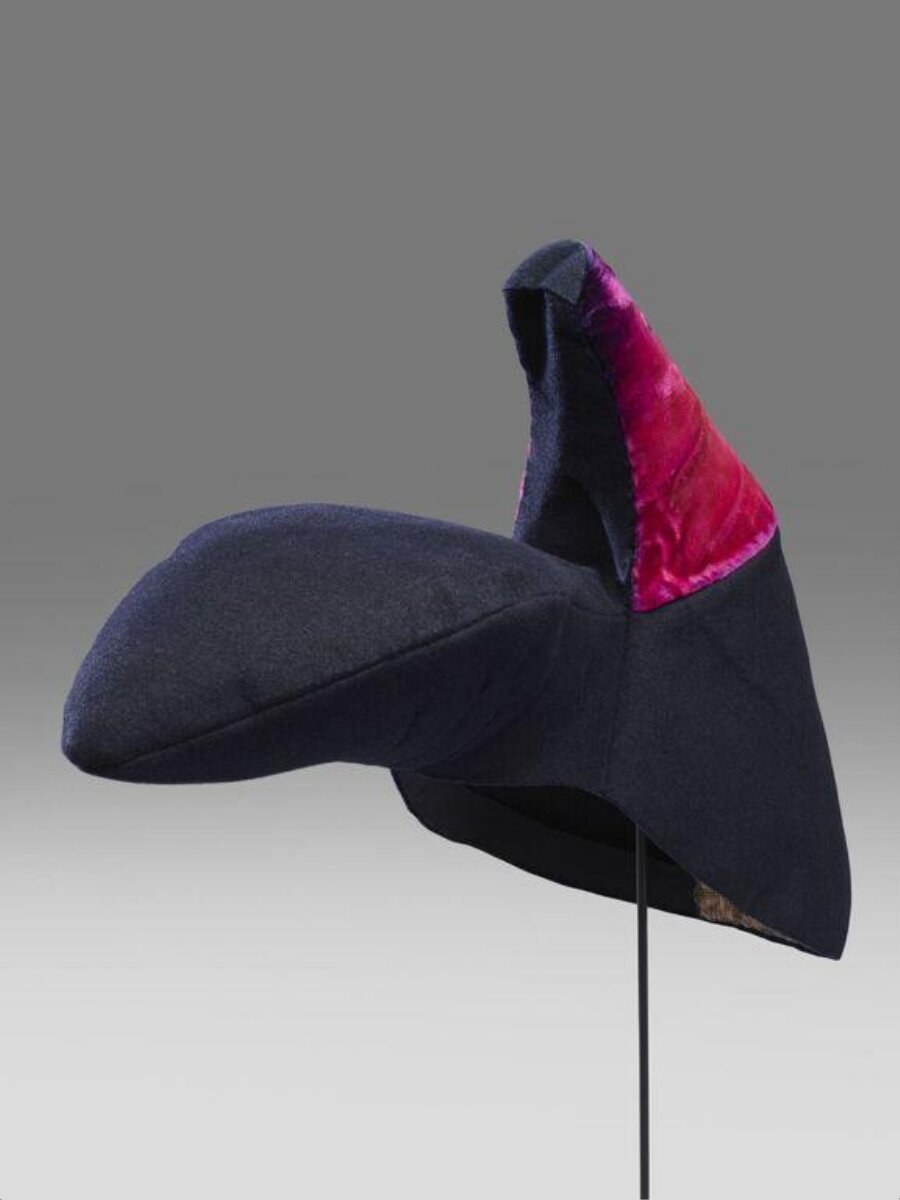
Elsa Schiaparelli and Salvador Dali, Shoe-Hat, 1937-38. Victoria & Albert Museum, London.
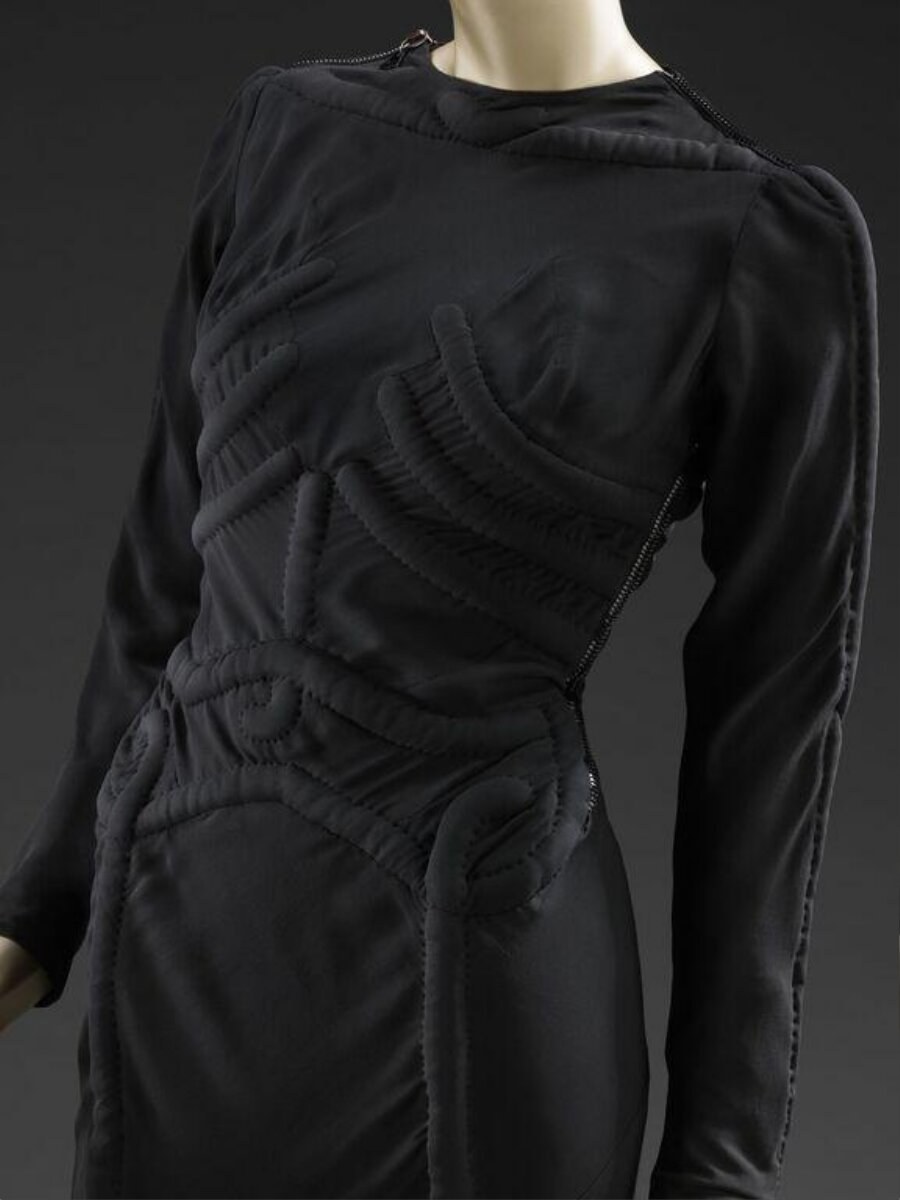
Elsa Schiaparelli and Salvador Dali, The Skeleton Dress, Circus Collection, 1938. Victoria & Albert Museum, London.
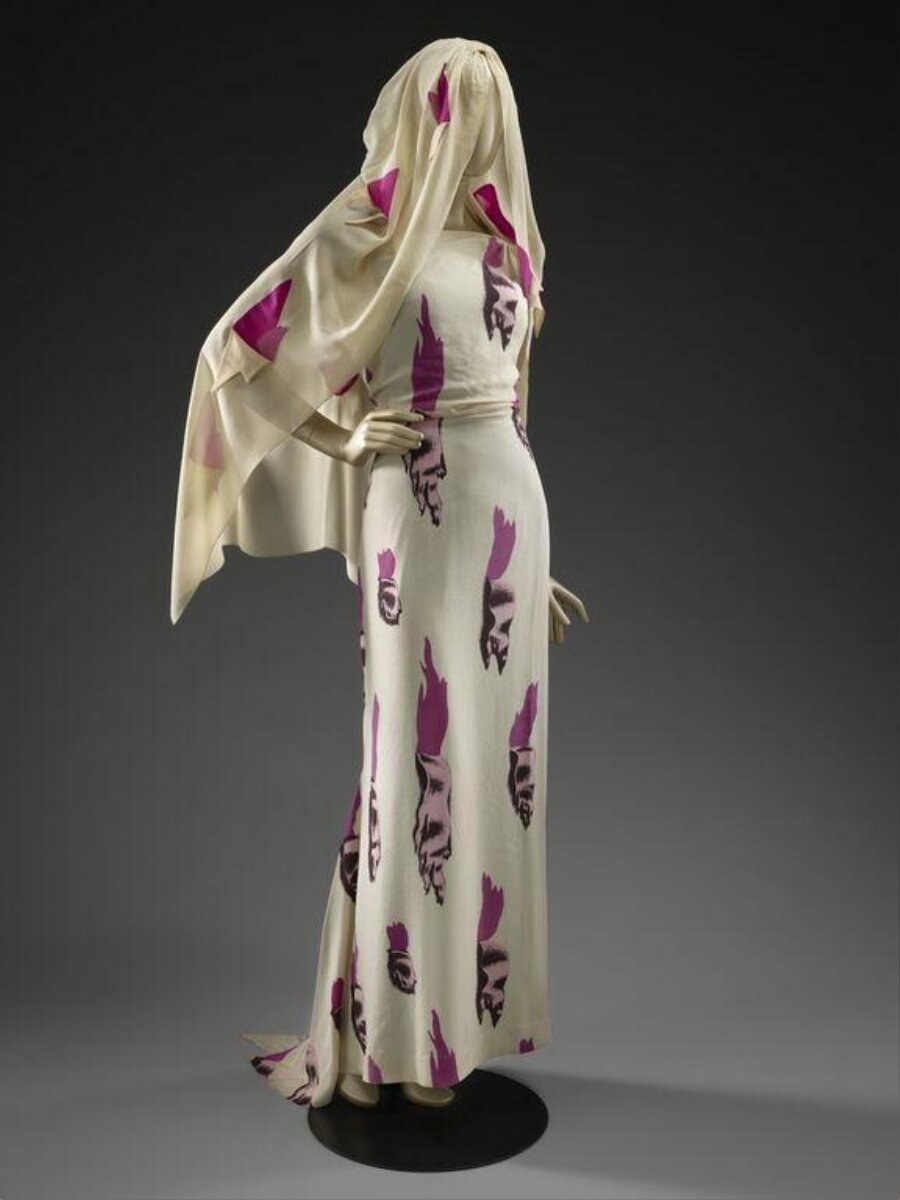
Elsa Schiaparelli and Salvador Dali, The Tears Dress, Circus Collection, 1938. Victoria & Albert Museum, London.
The Second World War forced her to move temporarily to the United States. After the conflict she returned to Paris, but the new aesthetic climate of the postwar period, dominated by Christian Dior’s “New Look”, displaced her experimental aesthetic. In 1954 she closed her couture house and published her autobiography.
Elsa Schiaparelli died in Paris on 13 November 1973. Her work redefined the relationship between art and fashion, definitively integrating poetic creation in the way of dressing within 20th-century culture.
Schiaparelli: Fashion Becomes Art
Victoria and Albert Museum
Cromwell Road, London SW7 2RL
Curator: Sonnet Stanfill
Until 1 November 2026
– Elsa Schiaparelli: rara avis – – Alejandra de Argos –