“Angkor: Naturaleza y Misticismo. Borja de Madariaga.
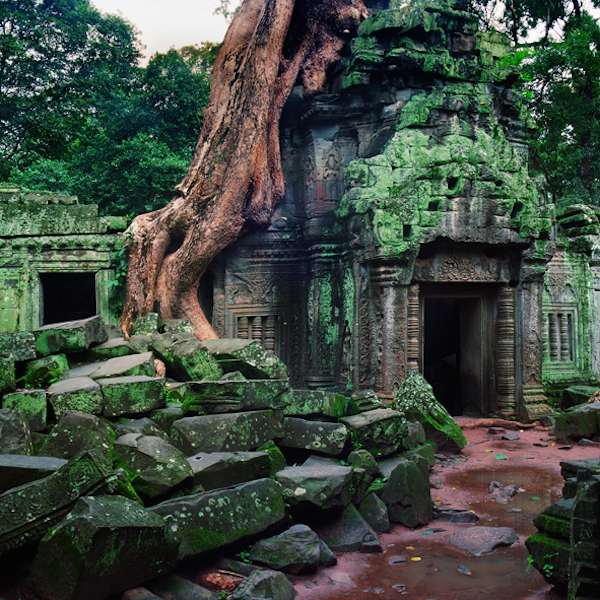
After his photographic exhibitions on Rome, Venice… Borja de Madariaga (Madrid, 1966) exhibits at the Espacio 51 gallery in Madrid “Angkor: Naturaleza y Misticismo”.
There are almost twenty photographs of various sizes, from 200×150 cm to 50×50 cm, with which the photographer seeks to offer us, from a very personal and lyrical approach, his sensations and emotions of one of the most overwhelming artistic ensembles in the world: “I try to highlight what moves me for its high aesthetic content, for the small detail, for capturing a stone, a tree, a perspective, things that in a distant time will remain inscribed in my memory”.
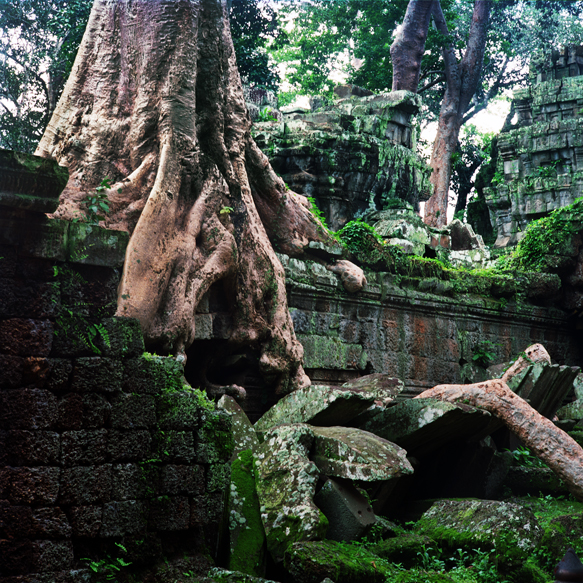
Angkor, located in the northwest of Cambodia, is the capital of the ancient Khmer Empire. The origin of this city dates back to the 9th century and its splendor lasted only until 1225. After that date the city was abandoned to its fate and literally isolated and engulfed by the jungle until in 1860 it was discovered by French missionaries.
The architectural complex, which covers an area of 400 km2, is composed of monumental temples built during this period and constitutes a jewel of Hindu art. In 1992 UNESCO named the monumental complex of Angkor a World Heritage Site.
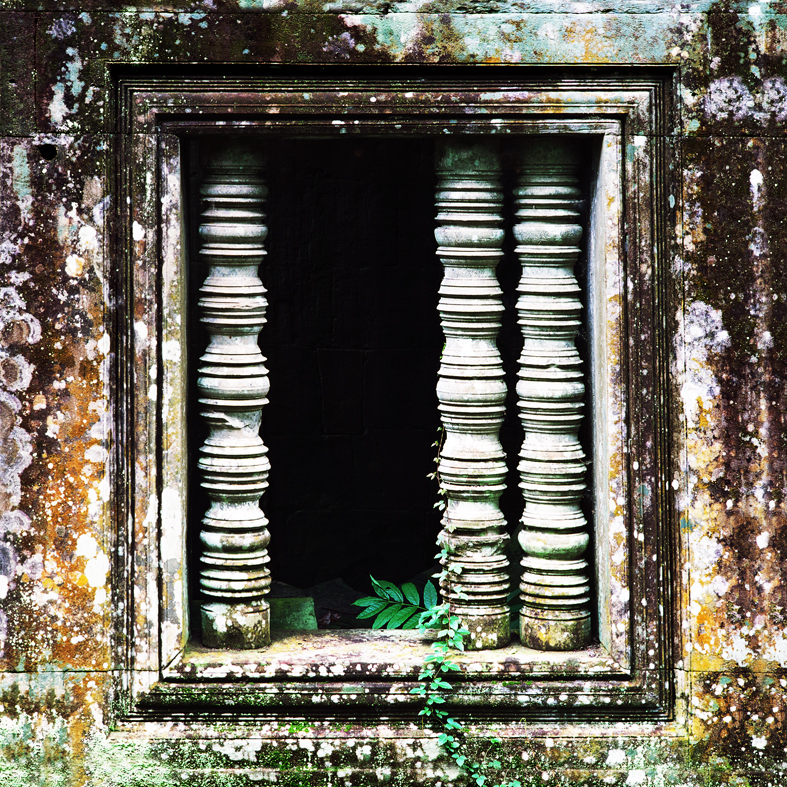
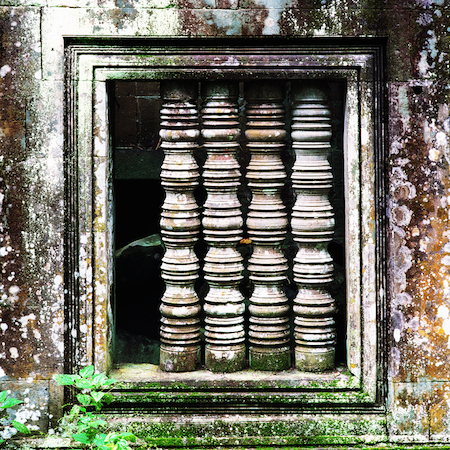
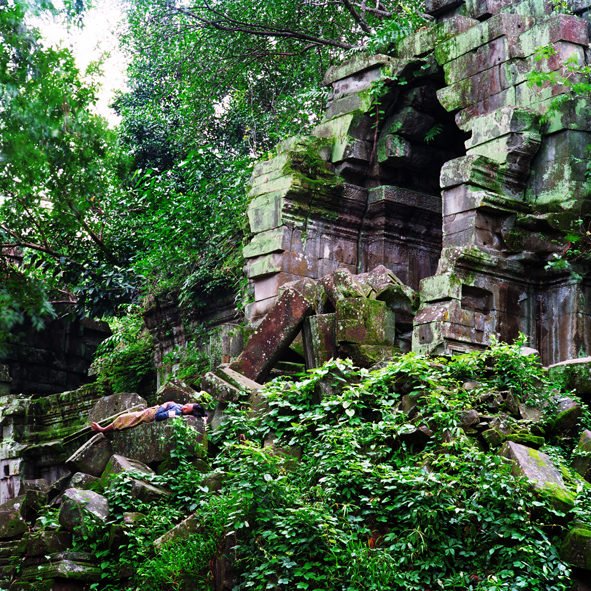
Madariaga photographs its main temples, Bayon, Angkor Wat… but the most striking images are those of Ta Prom, the only temple that has not been restored and in which the photographer revels in order to show us how nature has been gaining ground and the trees, with their enormous roots that invade the monuments, are so integrated that it is difficult to distinguish the boundary between nature and sculpture.
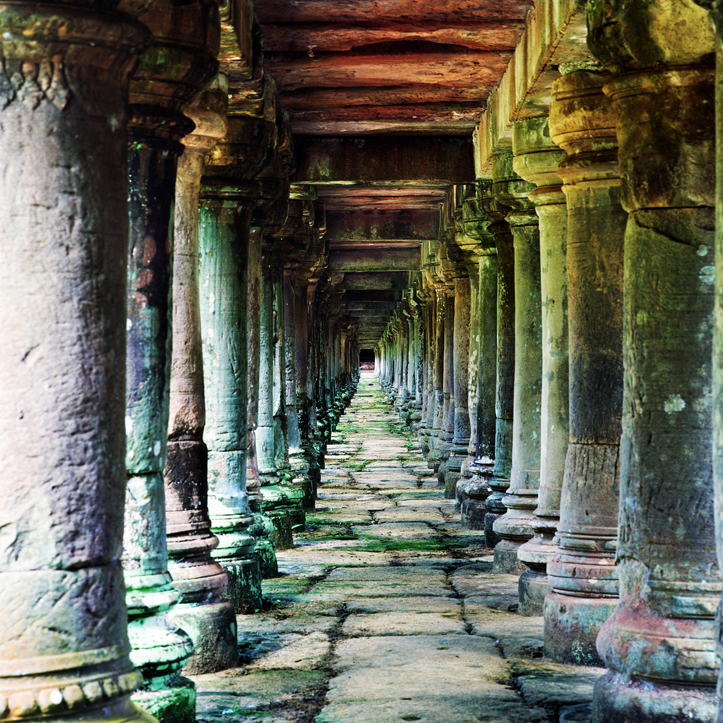
We were able to walk through the exhibition accompanied by the photographer, who would stop in front of some image: “I took these photographs this summer, on my honeymoon trip. My wife and I used to arrive very early at the temples, around six in the morning, fleeing the hordes of tourists. At that hour the colors are different, more intense, and a very fine mist covers everything…”
Aware of the difficulty of moving away from the “cliches and typical perspectives of this place photographed a thousand times”, Madariaga seeks, with these images of high aesthetic content, to lead us further into something of the mysticism, the essence, the sounds of the jungle, the haze and the mystery of these temples.
Of all the photographs we pause at one in which part of the magic of Angkor seems to be summed up: it is that of the dream of a Cambodian woman lying on a thousand-year-old stone, as if she too were part of a root of the immense trees that devour the architecture and above all the history of this civilization that remained, like her, asleep in the jungle for centuries.