

The “Deep Veins” of Poetry, Distilled by Fernando Aramburu
The author of Autorretrato sin mi and Patria explores in his new book the poems that have left the deepest imprint on him. An unhurried book, one that savors the lyric and invites us to enjoy it.
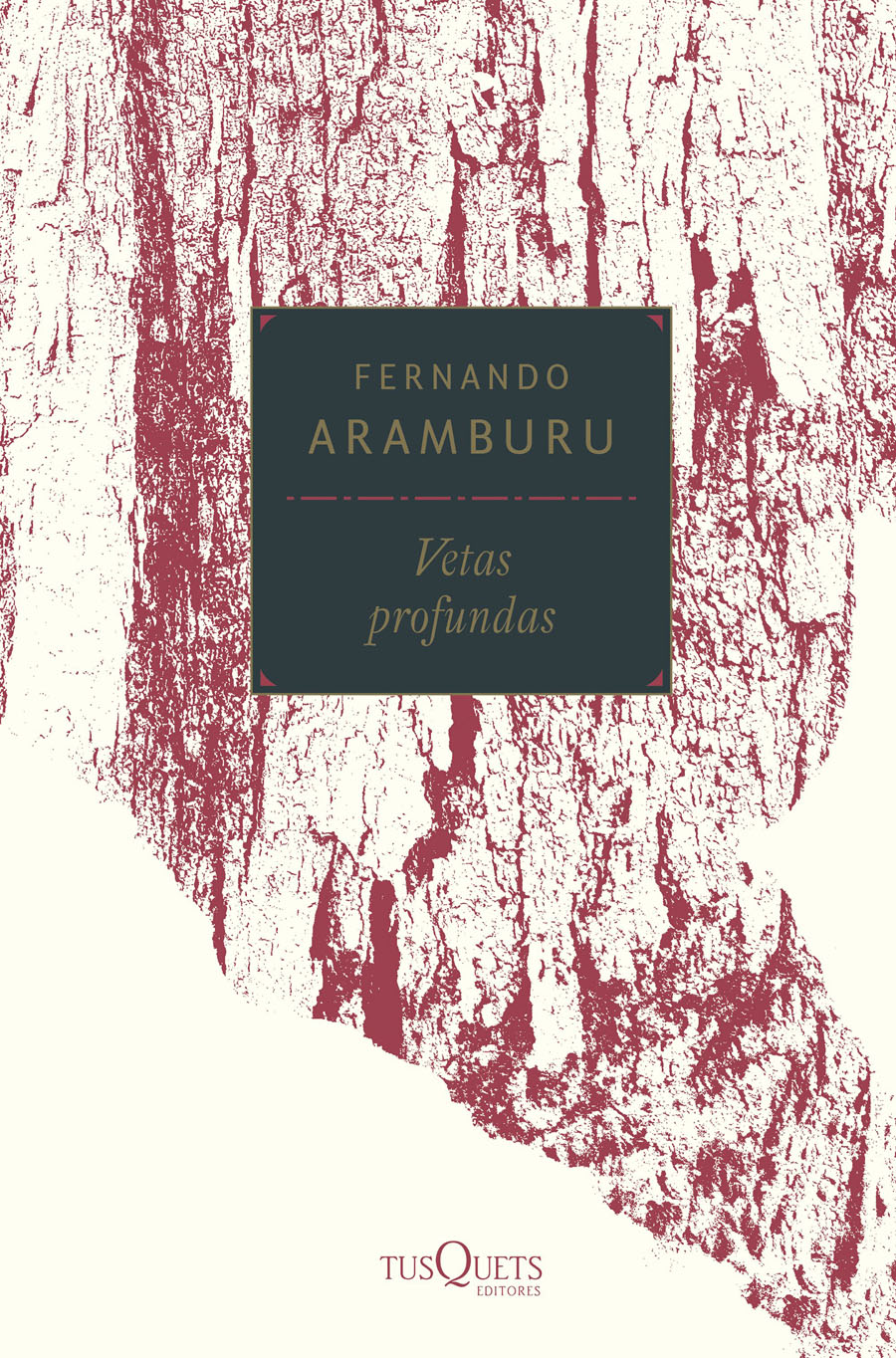
Cover of Vetas Profundas, by Fernando Aramburu. Tusquets. Planeta de Libros.
“Poetry is the dialogue of man, of one man, with his time”. So did Antonio Machado define this literary genre, created to treasure in words, characters and sounds all that reality does not show. The writer Fernando Aramburu (San Sebastian, 1959) makes his own the poems of his most beloved writers and carries them to the pages of Vetas profundas. The book at no point intends to be academic, theoretical or dogmatic; it is a treatise on the enjoyment of reading poetry, and above all, on reading the poetry of some of the finest poets of all time. Aramburu makes Machado’s definition his own and gives it a further twist, striking up a dialogue with the authors of forty poems. After the enormous international success of his novel Patria, the writer takes refuge in the intimacy of his poetic tastes and delights in the sonority, the terminology and the soul of the poems chosen for the selection.

The writer Fernando Aramburu. In rtve.es
As was to be expected, Vetas profundas is not simply a compilation of poems according to Fernando Aramburu’s personal taste. The pages also contain texts by the writer himself, which appeared in their day in the Territorios supplement of the newspaper El Correo. Alongside them appear poems by Borges, Rosalia de Castro, Pizarnik, Quevedo, Isabel Bono and many others, until covering the forty chosen for the occasion. In the interview recently published in the Culture section of the same newspaper, Aramburu stated that he had “let himself be carried along by reading and by the desire to reflect, not only on poetry, but also on any human matters whatsoever”. Taking each poem as a point of departure, the writer gives free rein to what they suggest, evoke or recall to him: his words turn into emotion, into nostalgia and into memory. According to Fernando Aramburu, this book is also an approach to poetry as universal literature and not as a minority art. In its pages, the reader will discover the genuine pleasure that its reading generates.
You may also like
 The Museo Picasso de Malaga Opens the Largest Bruce Nauman Retrospective in 25 Years
 “Ciudadanos” by Simon Schama. A Chronicle of the French Revolution
 “Historia y arte de la mirada”. Mark Cousins Takes Up the Baton from John Berger
 “Filosofia y ficcion”. Reflections and Stories by Ignacio Gomez de Liano
 “Eter”: Anka Moldovan Exhibits Her Latest Work in Mieres
 Cristina Iglesias Creates a Site-Specific Work for the Royal Academy of Arts