The Furies, from Titian to Ribera. Museo del Prado.
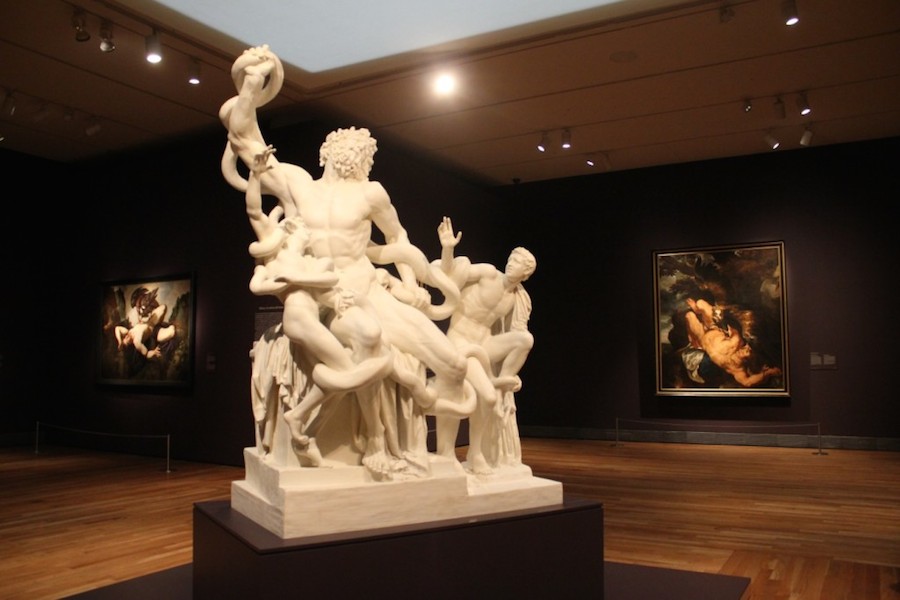
With great curiosity, I walked into the room that holds the collection of Furies that the Museo del Prado is exhibiting until the 4th of May. Just as the French art critic Louis Vauxcelles, on entering the Salon d’Automne of 1905, cried out his famous “Donatello among the wild beasts” that gave its name to the fauvist movement (fauves means wild beasts in French), so I came upon the “Laocoon among the Furies”. This magnificent sculpture of the priest of Apollo about to die with his sons, strangled by the serpents, reflects the extreme drama of the suffering that the Furies also represent; faces undone in a scream of pain and contortion.
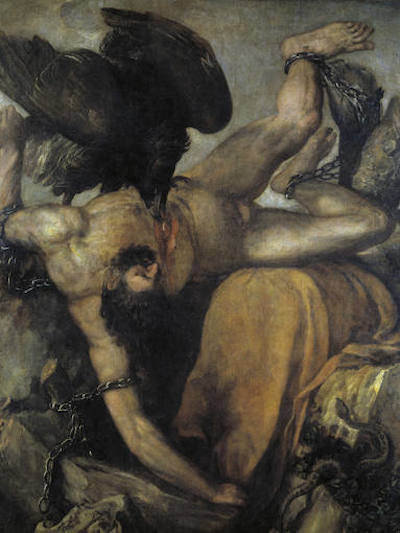
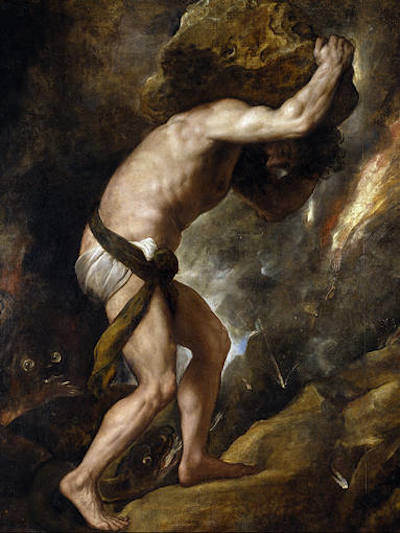
The centerpiece of the exhibition is the four paintings that Titian made for the Palace of Binche, in Brussels, commissioned by Mary of Hungary in 1548. They depict the figures of Greek mythology who were condemned to Hades for angering the gods: Tantalus to never reach the longed-for food that would satisfy him; Tityus to have his liver devoured by a vulture; Ixion to turn a wheel for all eternity; and Sisyphus to carry an enormous stone on his shoulders up a mountain only to have it fall and start again, which gave rise to the philosophical essay by Albert Camus, The Myth of Sisyphus, as a metaphor for the effort and absurdity of human life. These paintings were used politically by the sister of emperor Charles V as an allegorical representation of the German princes who had risen up against the emperor.
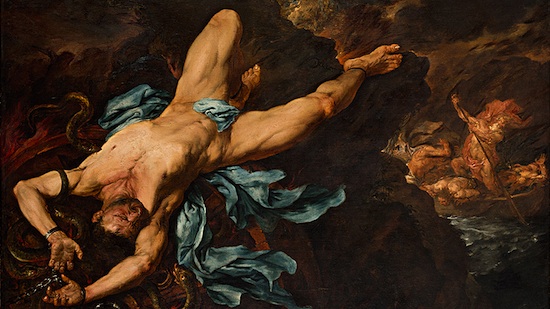
Also outstanding are the works of Rubens, Salvator Rosa, Langetti, Ribera or the drawing by Michelangelo Buonarroti, in an exhibition whose central theme, the Furies, covered a period from the mid-16th century to the late 17th century that was used as a political allegory.