Ephemeral Beauty in the Ring and Heartbeats on the Canvas
The matador Jose Tomas and the artist Luis Gordillo have been brought together by their tribute to the bullfighter Victor Barrio. A bull, “Lorenzo”, took the life of the young torero from Segovia. “Navegante” gored Jose Tomas gravely in Aguascalientes. The master of Galapagar knows what it is to die in the ring; he did it, but he came back after dwelling in that place. His heart never stopped beating even as life gushed out of him.
Ephemeral Beauty in the Ring and Heartbeats on the Canvas
The matador Jose Tomas and the artist Luis Gordillo have been brought together by their tribute to the bullfighter Victor Barrio. A bull, “Lorenzo”, took the life of the young torero from Segovia. “Navegante” gored Jose Tomas gravely in Aguascalientes. The master of Galapagar knows what it is to die in the ring; he did it, but he came back after dwelling in that place. His heart never stopped beating even as life gushed out of him.
I approach the master and the artist from afar. From that distance created in the subtle respect for the grandiose. The barrier at which the spectator peers out toward the intangible and limitless realm of art.
Bullfighting is the most extreme way of producing art and beauty. The bullfight is hand-to-hand combat, a struggle with the bull, the struggle against oneself. The fear of death is no brake on passion. That passion the English and French Romantics of the 19th century came seeking, making their way through Spain. The fascination with our culture, with its traditions and customs, was what moved artists and writers to cover over the rationality of the Age of Enlightenment with Romantic feeling. From then on the bullfight would be contemplated with a new gaze, that of the aesthetic vision which powerfully stirs the soul. It is the feast of the brave bullfighters! cries the score of Bizet’s Carmen, based on the novel by Prosper Merimee.
I approach Jose Tomas with the disinterested and free gaze that aesthetic contemplation allows. The gestures, the ritual, the pose, the countenance, the hieratic posture, the solemn and sacred liturgy. When the bullfighter’s mastery over the bull’s ferocity is reached and they seem to dance together, sublimation into art occurs. The elegance of the bullfighter in the tercio de muerte, in the moment of waiting, before the charge of the brave bull as a metaphor for the wild force of nature, creates an artistic symbiosis: life, death and beauty awakening the feeling of the sublime. Behind the purity of the visible images, a hidden structure of art is revealed as force, intensity and movement, which is essential in bullfighting.
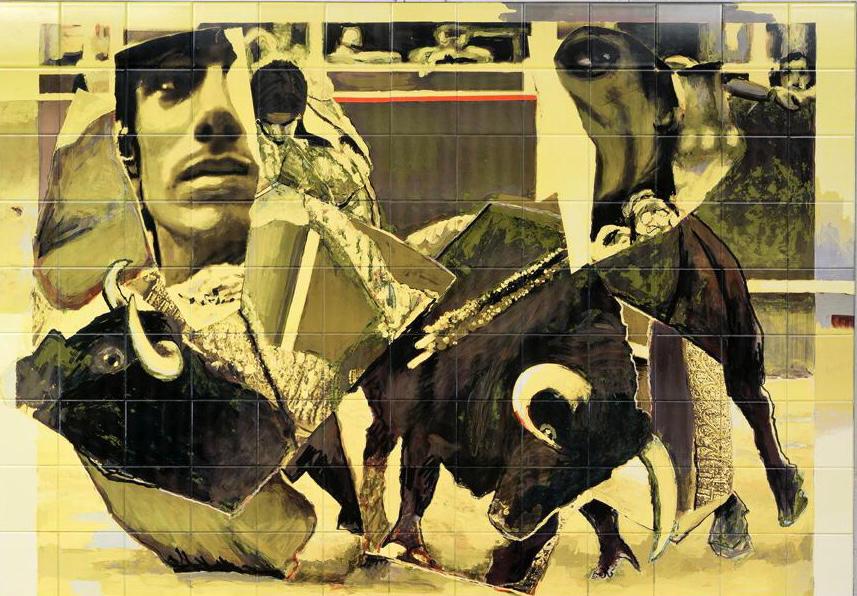
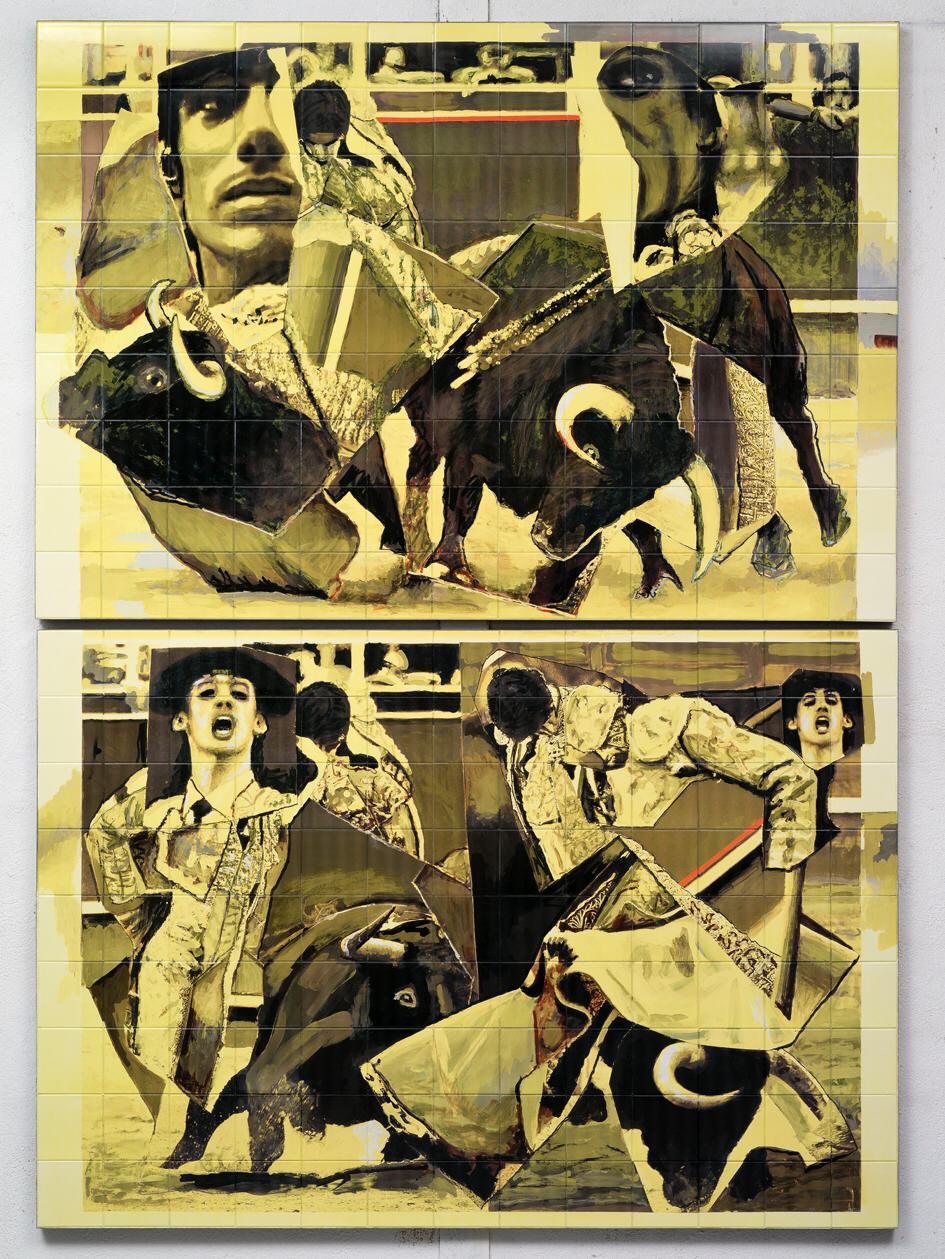
Luis Gordillo offers us a tribute that is superb and mystical in its meaning. Order in fragmentation, harmony in chaos, creation in destruction: “All I have left to do is start bullfighting in front of the painting”. Friedrich Nietzsche said that “for art to exist, for any aesthetic doing and contemplating to exist, one physiological precondition is indispensable: intoxication. Intoxication must first have intensified the excitability of the whole machine: before that happens, no art comes about”.
Before Gordillo’s work it seems we are witnessing a short circuit between the real and its image, between a reality and its representation, a little like matter and antimatter. From this results the universe of an artistic appearance that is fascinating in dramatizing so vividly the opposition of the sign to the real.
It is believed that in cave paintings the reality of Paleolithic peoples was subject to a mystical relationship between man and animal: in the caves a ritual of divine character would take place. Bullfighting has its ritual; painting, in a certain way, too. In the ring everything is true, and on the canvas as well. In both, the wild, the unconscious and instinct surface, but so too do form, order and harmony. All that which is hidden and is revealed in art.
– Ephemeral Beauty in the Ring and Heartbeats on the Canvas – – Alejandra de Argos –