Maruja Mallo: A Free Verse
The Reina Sofia Museum devotes an ambitious retrospective to Maruja Mallo, one of the most audacious and singular figures of the Spanish avant-garde of the 20th century. “Mask and Compass” tours her most emblematic series chronologically, allowing one to discover not only the evolution of her plastic language, always in transformation, but also the free, provocative and radically modern personality of an artist who defied aesthetic and social conventions in a turbulent time. An essential exhibition for understanding her place in the history of contemporary art.
I suggest not missing the opportunity to visit the Reina Sofia Museum, which until 16 March houses the exhibition “Maruja Mallo. Mask and Compass”. This broad retrospective makes a chronological tour through the painter’s various series, offering an exceptional occasion to get to know in depth the work of one of the most fertile and singular artists of 20th-century Spanish painting.
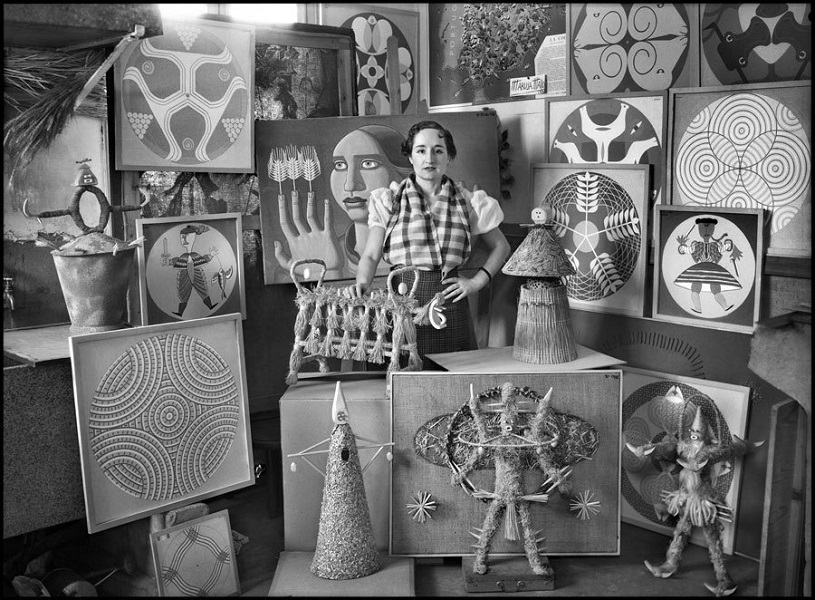
Maruja Mallo in her studio in Madrid, May 1936. Photograph by Arte Casa Moreno. Museo Reina Sofia, Archivo Lafuente Collection. Maruja Mallo, VEGAP, Madrid, 2025.
The most remarkable thing about this show is that we can approach without difficulty, not only the evolution of Maruja Mallo’s plastic language (whose real-life name was Ana Maria Gomez Gonzalez, 1902-1995), always at the avant-garde and in constant aesthetic transformation, but also the life trajectory that underlies each of her works, revealing the free, transgressive, original and radically modern woman she was. Of a reserved and versatile character, she displayed a caustic sense of humor, a personal and seductive magnetism, yet at the same time shy and reflective, with depressive signs sharpened at the end of her life.
Mallo’s artistic career is closely linked to the convulsive historical circumstances of 20th-century Spain, marked by political instability and the Civil War, profoundly conditioning her work and her existence, which led her to exile in Argentina.
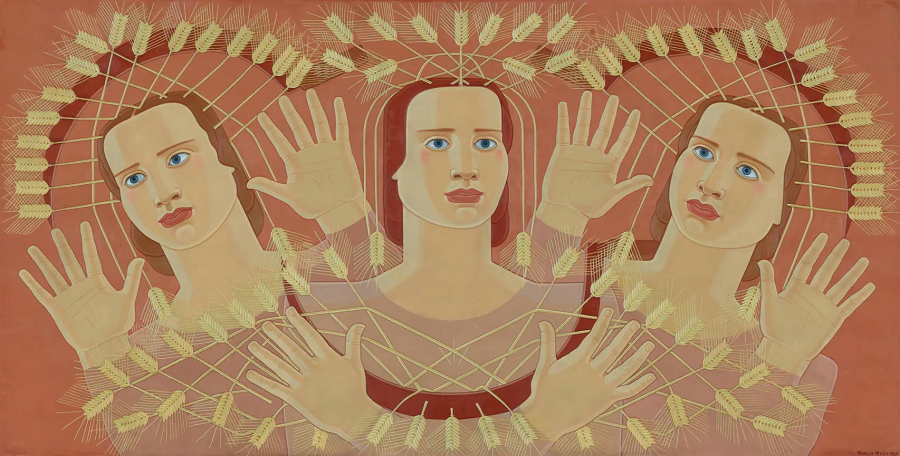
Maruja Mallo. Canto De Las Espigas, 1939. Oil on canvas. Museo Nacional Centro De Arte Reina Sofia.
Maruja Mallo was born in Viveiro, Lugo, but when reference was made to her place of origin she would reply: “I am not Galician, I am Celtic”. From a family of fourteen siblings, they moved to live in Madrid in 1922. In this city she would pass the entrance exam to study at the Royal Academy of Fine Arts of San Fernando. The most remarkable thing about Mallo in her new life in Madrid was, on a personal level, the intellectual relationships she forged from her youth with her first contacts with the avant-garde and the consequent exchange of ideas and energies that occurred in these relationships. She met Salvador Dali at the Academy; they became friends immediately, they shared a contradictory and provocative personality and both were great promoters of her work. The most interesting thing was the surrealist imprint and the association with the putrid. Salvador Dali had arrived from Catalonia at the Residencia de Estudiantes in 1922. This Residencia (1910), the birth of a New Art, was exclusively for men, but that did not prevent Maruja Mallo from being part of this group, among whom were friends such as the athletic Luis Bunuel, whom they nicknamed “Bunuel, the beast”, or the charismatic and elegant Federico Garcia Lorca, Bello, Moreno Villa or the Uruguayan painter Barradas. Mallo would describe these gatherings as “rituals or lyrical parties” where disguise or the mask, typical of the 19th-century Parisian avant-garde bohemians, were signs that endured in the extravagant artist, in whom exaggerated makeup gradually became, over time, her personal trademark.
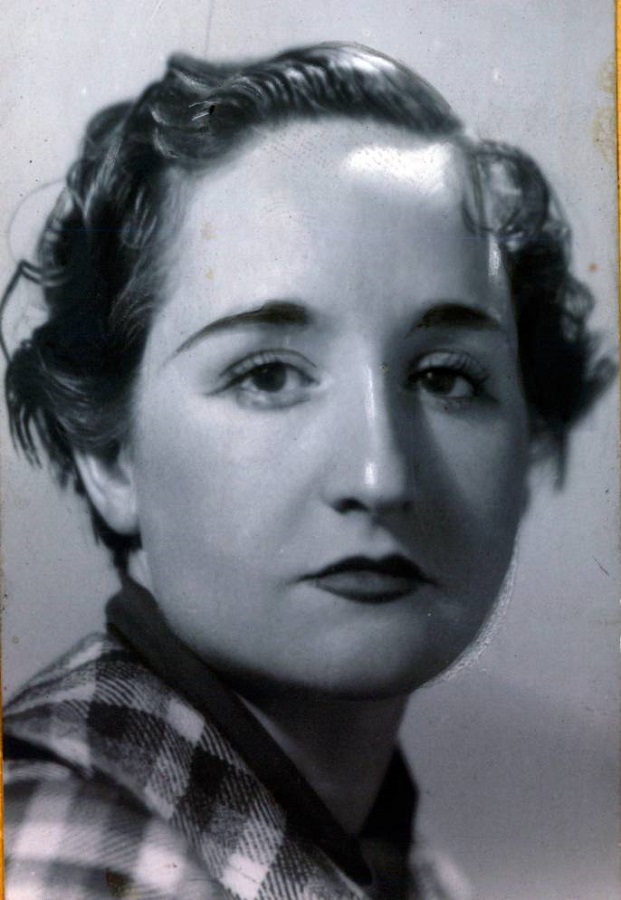
Portrait of Maruja Mallo.
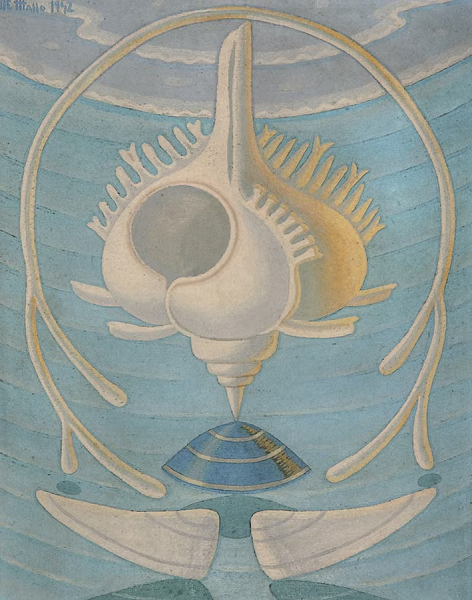
Naturaleza Viva III, 1942. Oil on artist’s board. Museo Nacional de Artes Visuales de Montevideo. Maruja Mallo, VEGAP, Madrid, 2025.
Her relationship with the group of the “Generation of ’27” was due to her overwhelming intelligence and artistic imagination. Among its members the painter and poet Rafael Alberti stands out, with whom she maintained a stormy but fruitful relationship between 1925 and 1930. This relationship would have great importance in Mallo’s life and in her creative dimension, with artistic collaborations such as the set she designed for his work La pajara Pinta. The intimate relationship with Miguel Hernandez generated an exchange of influences between the two. Likewise Maruja left a notable mark on other close friends such as Pablo Neruda.
The writer Ramon Gomez de la Serna was an enthusiast of her work. Andre Breton, father of French surrealism, whom she met in Paris, bought her work Espantapajaros from the series Cloacas y campanarios, a prophetic work of surrealist tone, of the war that would soon break out. That tone or influence was glimpsed in the previous series Estampas. Another of her famous series for its innovative character is, without doubt, Verbenas which, in Mallo’s words, spring from Spanish popular art. These paintings were related to ultraism, since they are an irreverent poetics that hides a sharp social critique. Of her Garcia Lorca said: “These are the paintings I have seen painted with the most imagination, with the most grace and with the most sensuality”.
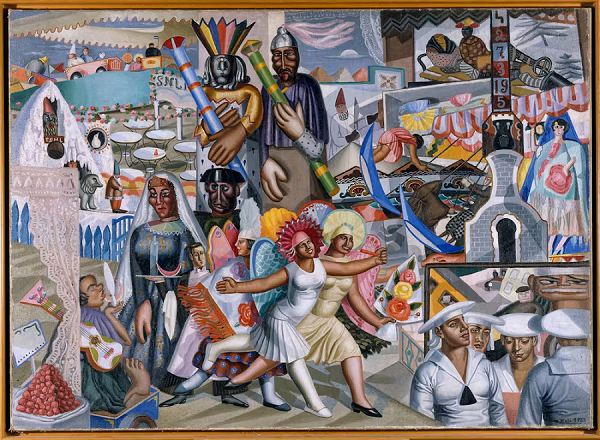
La Verbena, 1927. Oil on canvas. Museo Nacional Centro de Arte Reina Sofia. Maruja Mallo. VEGAP, Madrid, 2025.
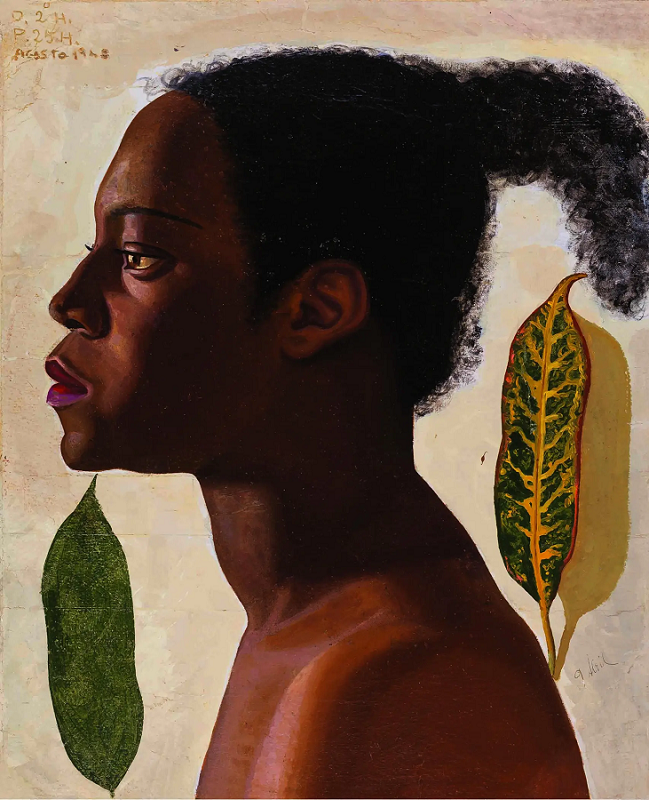
Joven negra, 1948. Oil on canvas. Museo Nacional Centro de Arte Reina Sofia. Maruja Mallo. VEGAP, Madrid, 2025.
She never pigeonholed herself in any movement, not even the surrealist one in which she was labeled, since her continuous evolution and originality were beyond pigeonholing.
It is an impossible task to capture in so few words the richness of the life and artistic career, so prolific and heterogeneous, of Maruja Mallo. Therefore, I take the liberty of recommending to all those who wish to delve into this figure and the important place she occupied in the international art world, that they read the documented and fascinating biography by Shirley Mangini, “Maruja Mallo” (Editorial Circe). Maruja Mallo died in her sleep at the Ibea clinic.
– Maruja Mallo: A Free Verse – – Alejandra de Argos –